


Listen, I know cooking a massive piece of meat like a standing rib roast feels like the ultimate kitchen high-stakes moment. Christmas, Easter, that big anniversary—everyone is staring at that roast, waiting for perfection! I used to sweat bullets over this cut, terrified of serving dry, gray meat. But over the years, after countless hours of testing temperatures and herbs, I cracked the code. I’m here to tell you my secret recipe for the Ultimate Herb Crusted Standing Rib Roast. Forget everything you think you know; this method guarantees a crackly, fragrant crust and a perfectly tender, juicy center, every single time you make it. It’s truly show-stopping! If you want to see what else we’ve been cooking up, check out the latest kitchen adventures right here.
Why This Herb Crusted rib roast is Your Holiday Roast Centerpiece
Honestly, making a beautiful rib roast shouldn’t feel like a gamble! This recipe just takes the worry out of feeding a crowd. When you follow my two-step temperature guide, you get professional results without needing culinary school training. Trust me, this is the centerpiece your holiday table deserves.
- That crust? It’s seriously shatteringly crisp and packed with garlic and fresh herbs.
- We guarantee that deep, gorgeous pink color right through the center of your rib roast.
- It uses simple steps but looks like something straight out of a magazine.
If you love the sound of that crust, you should really look at my recipe for Garlic Herb Butter Roast sometime too—it’s got a similar vibe!
Achieving a Perfect Medium Rare rib roast
The real wizardry here is the temperature technique. Instead of blasting the oven the whole time, we shock the roast at a super high heat first to create that incredible exterior crust. Then, we drop the heat way down low to gently bring the interior up to that stunning, flawless medium-rare temperature. It’s controlled cooking that respects the meat!
Gathering Ingredients for Your rib roast
Okay, let’s talk about what you need to grab before you even think about turning on the oven. With a show-stopping cut like this, the quality of your ingredients matters, and I’m not just talking about the beef itself! We are going for flavor fireworks here, but it all starts with the right base.
First and foremost, you must get a good quality standing rib roast. I mean it! You want that gorgeous marbling—that fat is where all the flavor lives for this rib roast. If you’re nervous about carving later, you can ask your butcher to remove the bones for you, which is a huge help, but they tie them right back on with butcher’s twine. It just makes slicing so much cleaner when it’s done resting.
Here is the list of what you need to make that signature crust. Remember, precision matters when you’re dealing with a centerpiece roast!
- One (5-7 pound) standing rib roast—seriously, measure this!
- Three tablespoons of olive oil.
- Six whole cloves of garlic, minced super fine (don’t use the jarred stuff, please!).
- Two tablespoons of fresh rosemary, chopped (use your fingers to really bruise those needles a bit!).
- One tablespoon of fresh thyme leaves.
- One tablespoon of coarse, flaky salt—that’s coarse, not table salt!
- One teaspoon of fresh cracked black pepper.
- For the sauce: About a half-cup of good beef broth and a splash of water. That’s it!
If you want to see how I use these exact flavors in a smaller format, I have a great Garlic Herb Butter Roast recipe you might enjoy too.
Ingredient Notes and Substitutions for the Herb Crusted Roast
Now for my opinions—and trust me, I have them—on these items! When it comes to the herbs, please, please use fresh. Dried rosemary tastes like dusty pine needles compared to the vibrant punch of fresh. You’re making a special occasion beef centerpiece; treat it right!
The salt choice is also very important for this herb crusted roast. You need coarse salt, whether it’s kosher or sea salt, because the larger crystals help draw out the moisture slightly on the surface before the dry heat hits it, ensuring that crust gets perfectly seasoned and crisp. If you use fine table salt, it dissolves too quickly and you end up just salting the surface too heavily.
And remember that tip about asking the butcher to tie the bones back on? That’s my little secret for making cleanup easier. If they do that, just make sure you snip that twine and remove the bones before you carve up your beautiful, tender beef roast for serving!
How to Prepare the Ultimate rib roast: Step-by-Step Instructions
Getting this rib roast ready is where the magic starts, but don’t rush it! The very first thing you absolutely must do, no exceptions, is take that beautiful piece of meat out of the fridge at least two to three hours before you plan to cook it. That “room temperature” step is non-negotiable for an even cook. While it’s chilling out, gather your garlic, rosemary, and thyme and mix them into that coarse salt and pepper. You want to mush this all together until you have a coarse, fragrant paste—it should look almost wet.
Next, go ahead and rub that whole roast down with your olive oil. This is just the glue that holds our amazing crust on. Now, take your herb paste and just press it firmly all over the fat cap and the sides of that gorgeous standing rib roast. Really work it in there so it adheres completely.
Preheat your oven to a scorching 450 degrees Fahrenheit! We’re going to do a quick sear. Pop that roast, fat side up, onto a rack in your roasting pan. Roast it hard at 450°F for exactly 15 minutes. This blast of heat seals in juices and gets that crust going. After 15 minutes, you reduce the heat down to a gentle 325 degrees F. Now, we wait and watch that thermometer!
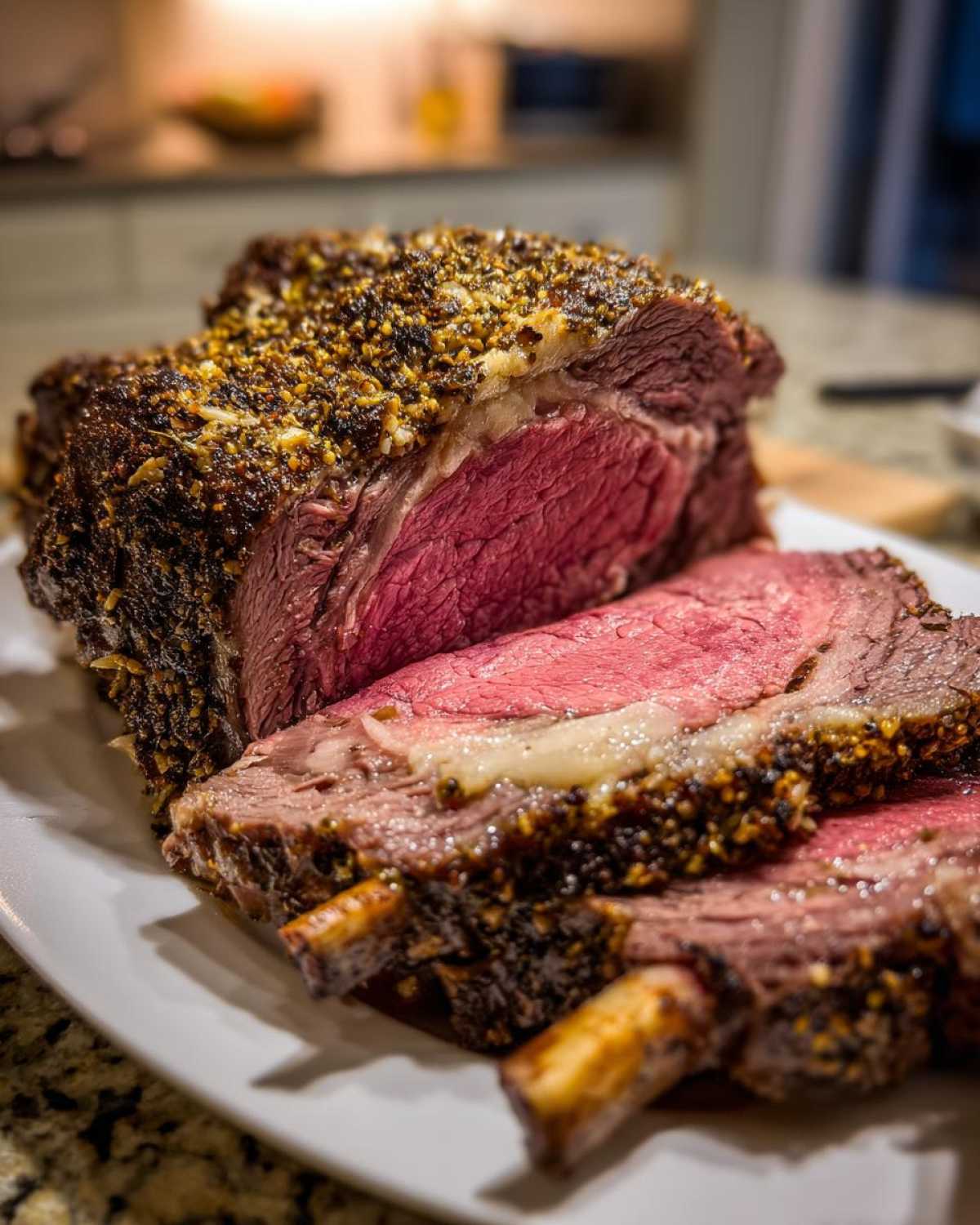
For that perfect medium rare roast, you’re pulling it out when the very center hits 125 degrees F. This is where the roast beef cooking guide comes in handy—using a reliable meat thermometer is key here!
Crucial Timing: Resting Your Cooked rib roast
Look, I know you’ll be hungry, but if you carve this oven roasted beef right away, all those beautiful juices you worked so hard to keep inside are just going to stream out onto your cutting board. That’s a crime! You have to let this tender beef roast rest, loosely tented with foil, for a solid 20 minutes. During this time, the temperature will calmly climb up to about 130 or 135 degrees F. That carryover cooking is what makes the final roast so much juicier. Seriously, guard that roast with your life for 20 minutes!
Making the Au Jus for Your Tender Beef Roast
You’ve pulled your amazing rib roast out, and now you’re looking at a pan full of gorgeous, sticky brown bits stuck to the bottom. Don’t you dare throw those away! That brown, caramelized goodness—that’s called the *fond*, and it’s pure flavor gold for your sauce. You need to make a quick au jus to serve with your tender beef roast because a prime rib this good deserves a savory little river to swim in.
The stovetop method is super fast and gives you way more flavor than just using plain broth. Just set that roasting pan right over medium heat on your stovetop—make sure your handles aren’t hanging over the edge, safety first!
Now, grab a wooden spoon and scrape like you mean it! Get every single one of those flavorful browned bits up off the bottom of the pan and incorporate them into the liquid. Once that’s done, pour in your beef broth and a little water. Let that simmer for about five minutes, stirring constantly until it thickens up just a touch. Strain it right into a little gravy boat, and you are done! That simple pan sauce is the perfect finishing touch for slicing up that incredible rib roast.
Tips for a Foolproof Roast Recipe and Perfect Medium Rare Roast
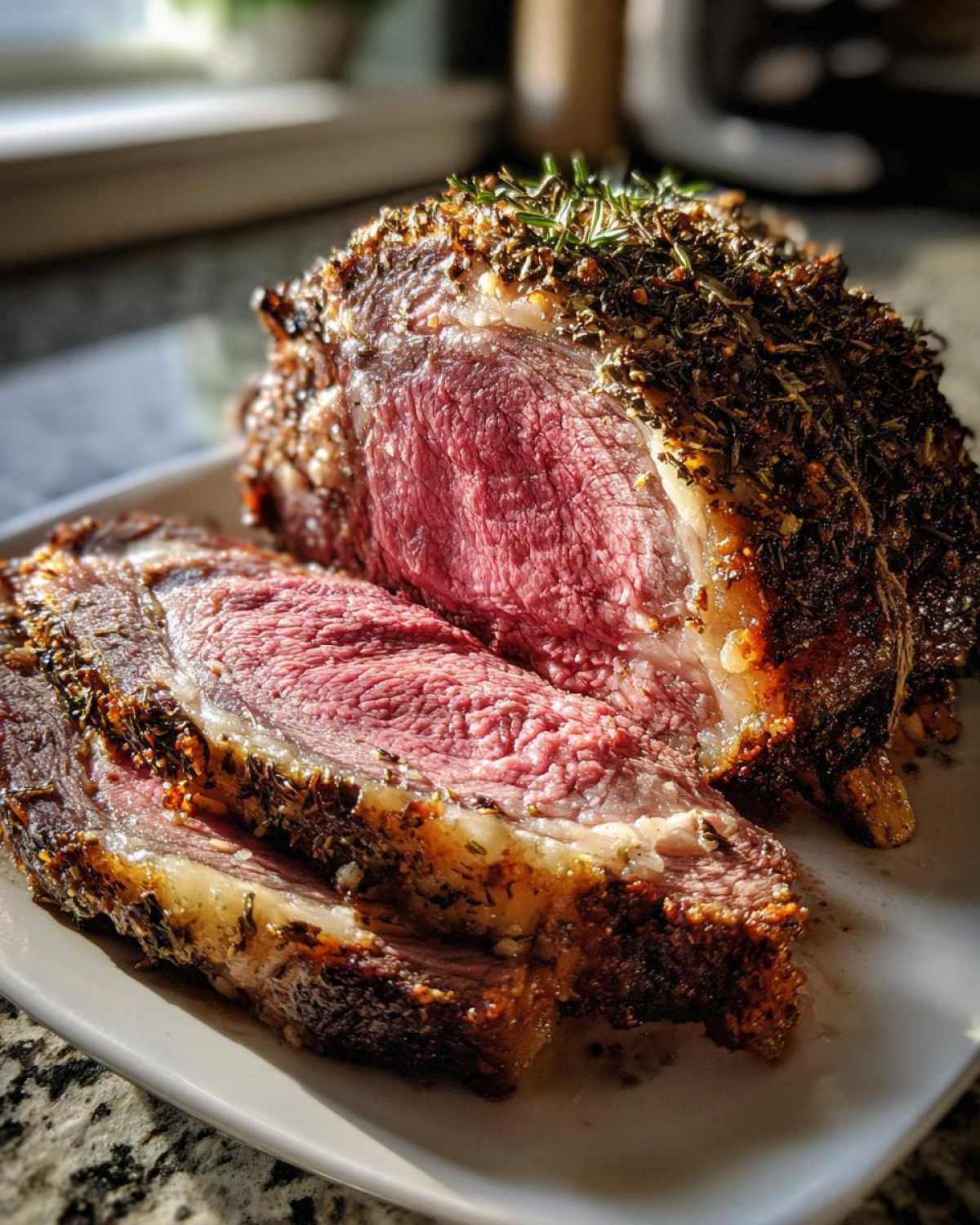
I know the biggest fear when cooking a rib roast is that ugly gray band of overcooked meat circling the outside. That happens when you skip two crucial steps I already mentioned, but let’s hammer them home one more time because they are the secret to that perfect medium rare roast!
First, that 2 to 3 hours on the counter before it goes into the oven? That’s not optional! If you put a cold roast in the oven, the outside cooks way too fast trying to catch up to the center, and boom—you get uneven cooking. Allowing that standing rib roast to relax and warm up ensures the heat penetrates evenly. Trust me on that patience when prepping!
Second, your thermometer placement needs to be spot on. You can have the best prime rib recipe in the world, but if you stick the thermometer into a pocket of fat or too close to the bone, your reading will be wrong. You must aim for the very center of the thickest part of the meat, making sure the tip is only touching muscle tissue. I always check my thermometer readings against the official guidelines found here just for peace of mind before I pull it out.
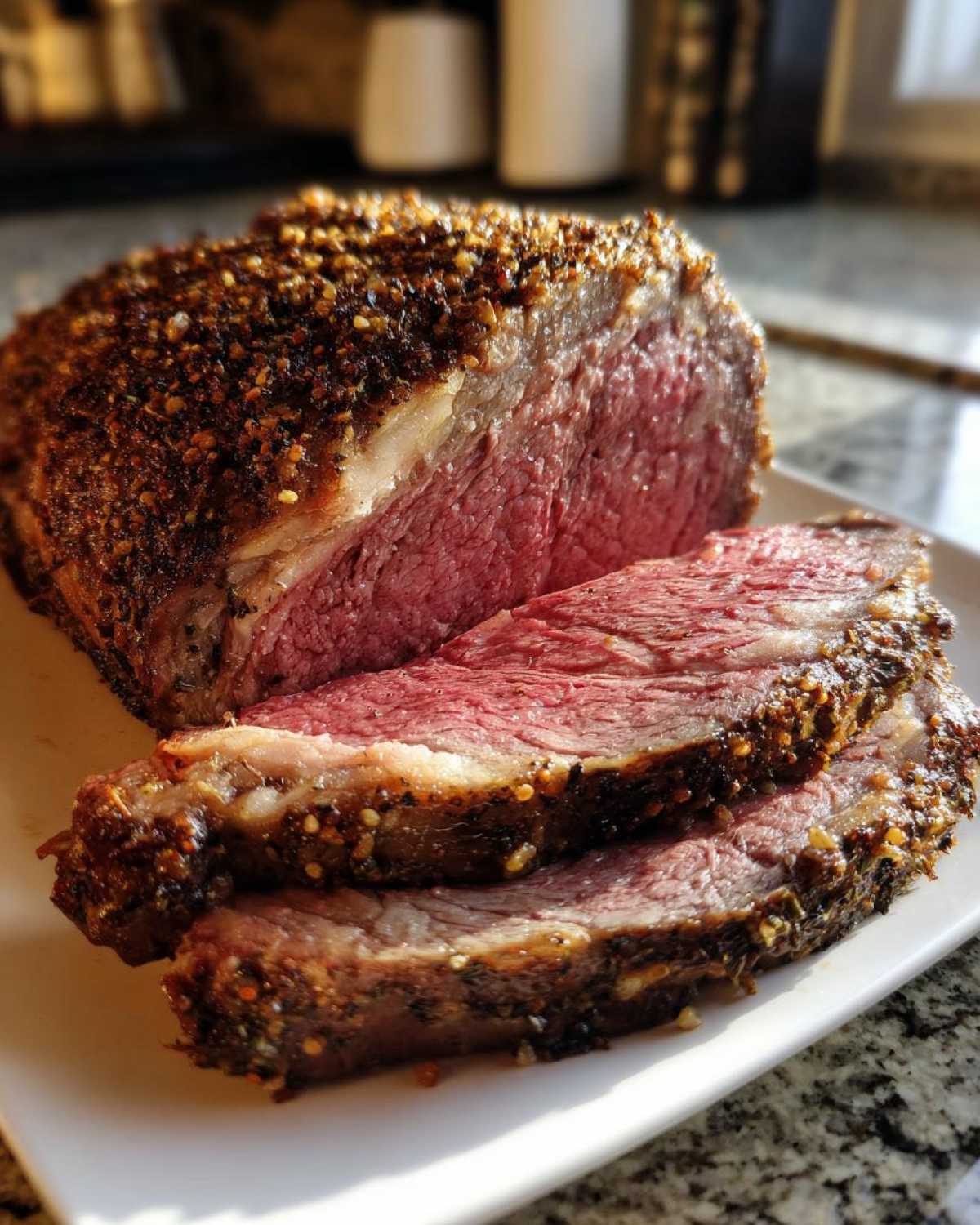
Also, don’t be afraid of the high-heat sear! That initial 15 minutes at 450°F is what sets the seasoning and creates that gorgeous mahogany color on the crust. If you’re worried about the herbs burning, just use slightly less oil during that initial blast, but you need that heat to start the process for a truly flavorful roast.
If you follow those two steps—tempering the meat and accurate thermometer placement—you are virtually guaranteed a winning oven roasted beef result every single time. It’s honestly that simple!
Serving Suggestions for Your Special Occasion Beef
Okay, you’ve mastered the roast—it looks incredible, it smells like heaven, and it’s resting beautifully. What are you going to put next to this magnificent hunk of beef? You can’t just serve this special occasion beef naked on a platter! We need accompaniments that stand up to that rich, meaty flavor without overwhelming it.
When I’m planning the menu around a big roast like this, I always go for sides that either soak up that delicious pan jus or cut through the richness with a little acid or creaminess. It’s all about balance, right?
My absolute go-to is creamy mashed potatoes. Not just regular mash—I mean garlic-whipped mash that’s so smooth it feels illegal. Those potatoes are the perfect vehicle for catching all the juices when you slice the meat.
If you’re looking for something starchy that’s a little more elegant, you absolutely have to try my recipe for Classic Scalloped Potatoes. They bake up right alongside the roast (just be careful with your timing!) and everyone fights over the crispy edges.
For greens, you have two choices, and both work fantastically well:
- Creamed Spinach: It’s decadent, it’s traditional, and it just goes perfectly with beef. It adds that necessary layer of earthy creaminess.
- Roasted Asparagus with Lemon: If you need something green and bright, a quick roast of asparagus tossed with olive oil, salt, pepper, and a huge squeeze of fresh lemon juice right before serving is amazing. The acid cuts right through the richness of the meat wonderfully.
And don’t forget vegetables that roast well! Parsnips tossed with a little maple syrup or some simple baby carrots roasted alongside the meat in the last hour are fantastic additions. They add great color to the platter, too. You want that table to look abundant and celebratory!
Storage and Reheating Instructions for Leftover rib roast
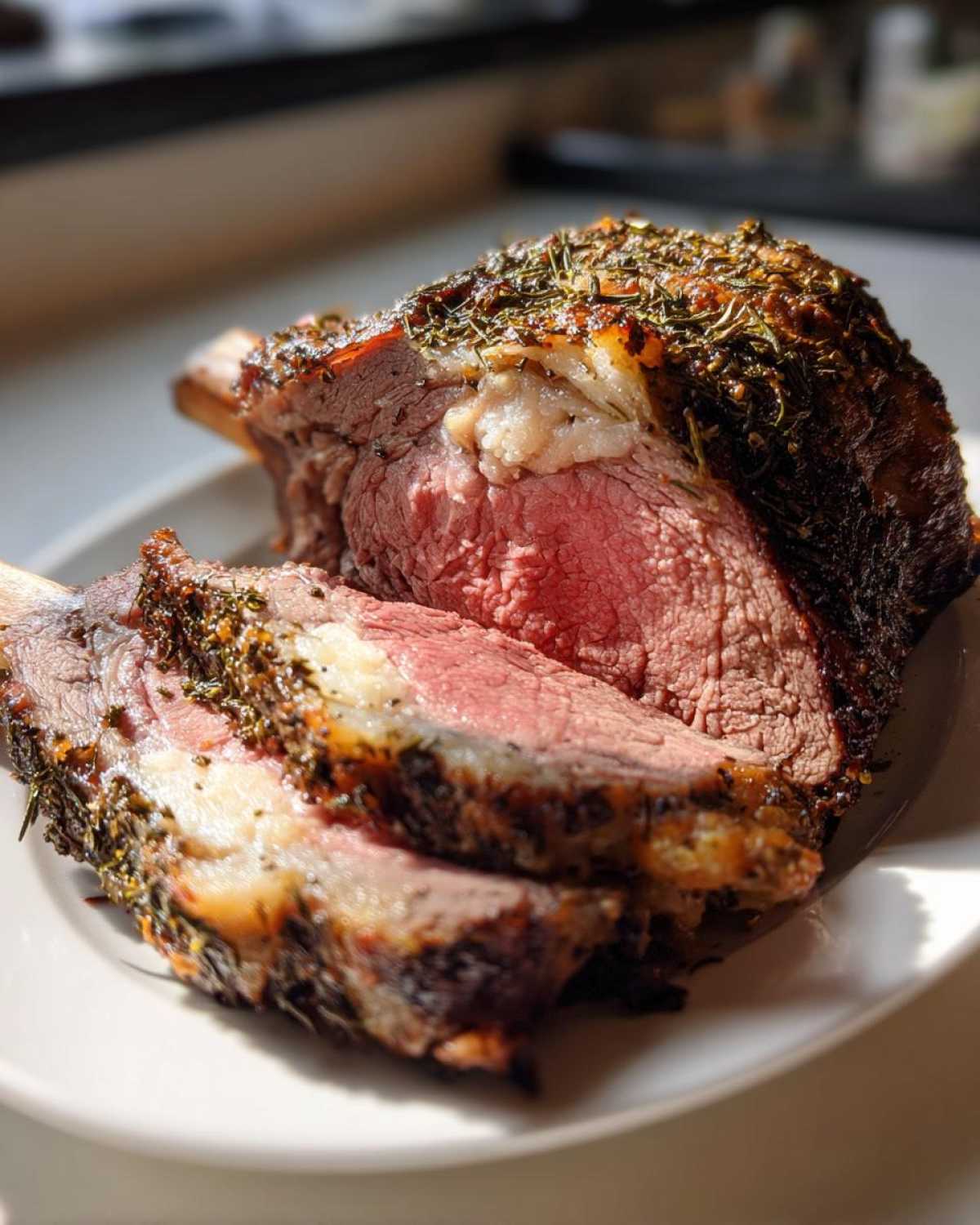
Oh, the glorious leftovers! If you’ve got any of this amazing rib roast left—and honestly, I hope you do—we need to treat it gently so it doesn’t turn sad and dry on day two. The trick is really about the method you use for reheating any slices you didn’t use right away.
If you happen to have a big slab left, just store it whole and slice what you need for each meal. But if you’ve already carved everything up, store those slices tightly wrapped in plastic wrap first, then in an airtight container in the fridge. Don’t forget that liquid gold au jus from earlier—store that separately!
When you want to reheat those leftovers, the oven is your friend, but kept low and slow. Never microwave a thin slice of prime rib unless you enjoy jerky! Place the slices in a baking dish, add a splash of that saved au jus—just enough to coat the bottom—cover it tightly with foil, and warm it at a very low 275 degrees F until just warmed through. This is why I love slow cooker recipes sometimes; they remind me how to be gentle with leftovers!
Frequently Asked Questions About Cooking a rib roast
What if I don’t have a meat thermometer for this rib roast?
Oh, no! If you don’t have a meat thermometer, you are flying blind, and trust me, you don’t want to guess with an expensive cut like this! But if you are truly stuck—and I mean in a bind—you have to rely on the touch test, though it’s never as accurate as the real thing. Gently poke the thickest part of the roast with your index finger. If it feels very soft and spongy, it’s definitely rare or raw. If it feels like the fleshy part between your thumb and index finger when your hand is totally relaxed, you might have a perfect medium rare roast. But for a Classic Beef Roast this important, please run to the store first thing and grab a cheap digital thermometer! It’s the only way to guarantee success. You can always check out my guide on the best prime rib temperature settings for reference!
How exactly do I carve a standing rib roast?
Carving is intimidating, but it’s easy once you know the trick! First, you must let the roast rest; we covered that, right? If the butcher left the bones attached for you (which I highly recommend for the best flavor!), you’ll notice they are tied on. Snip those strings and pull the bones out first. Now, you can slice the meat away from where the bones were nestled. Slice the large piece of meat *against* the grain into thickness you like—usually about a half-inch thick for a great piece of oven roasted beef. Don’t cut the slices too thin, or they might dry out before they even hit the plate!
Can I cook this rib roast from frozen?
Absolutely not! I mean, you *could* try, but this recipe hinges on bringing the roast up to room temperature first. If you try to cook a frozen or even very cold rib roast, the outer edges will turn gray and tough while the center is still literally frozen rock solid. Since our method relies on that initial 15-minute high-heat sear followed by a long, slow cook, you need that consistent temperature to start with. Always take it out early! If you forget, the best thing you can do is put it in a slightly warmer oven (maybe 400°F) until it hits about 90°F internally, then drop the temp down, but thawing it on the counter first is always the better route for a juicy beef roast.
Is the herb crust really necessary for the best prime rib?
Is gravity necessary for an apple to fall? Yes! Look, you can roast a ribeye roast recipe without an herb crust, and it will be fine, but why would you? This crust isn’t just decoration; it’s the flavor engine for your entire holiday roast centerpiece! The garlic and herbs bake beautifully into the fat layer, creating a savory blanket that bastes the meat underneath as it roasts. It protects the edges and adds so much aromatic depth. If you’re going to use a beautiful, expensive cut of meat, you might as well make it unforgettable with this amazing seasoning!
Estimated Nutritional Information for this rib roast Serving
Alright, let’s get down to the numbers just to satisfy our curiosity, though honestly, when you’re eating a glorious rib roast on Christmas, who is counting exactly? These figures are rough estimates based on the average weight and ingredient portions listed in the recipe, assuming you get about six hearty servings from the whole cut.
Keep in mind that the exact fat content versus protein balance really depends on how much fat cap you trimmed off or how much of the delicious, flavorful fat you left on the meat for moisture—which I totally recommend you do! This is for one standard serving size, about 6 ounces of cooked meat after resting.
Here’s the ballpark breakdown for one serving of this incredible oven roasted beef:
- Serving Size: 6 ounces cooked meat
- Calories: Hanging around 450 calories. Pretty great for a main event!
- Protein: We are looking at about 40 grams of high-quality protein here.
- Fat: Roughly 30 grams total fat content.
- Saturated Fat: About 12 grams.
- Carbohydrates & Fiber: Zero—we kept this clean! Sodium: Around 350mg (this can go up depending on how salty you like your rub!).
- Cholesterol: About 120mg.
The nutrition for this Classic Beef Roast is pretty simple since we aren’t adding flour or sugars outside of maybe a tiny bit if you really load up your au jus with dark drippings. Enjoy every juicy bite of your perfectly cooked rib roast!
PrintUltimate Herb Crusted Standing Rib Roast
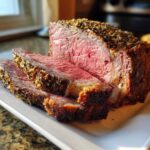
A recipe for a tender, juicy standing rib roast coated in a savory garlic and herb crust, cooked to a perfect medium-rare.
- Prep Time: 20 min
- Cook Time: 180 min
- Total Time: 200 min
- Yield: 6-8 servings
- Category: Main Course
- Method: Roasting
- Cuisine: American
- Diet: Low Fat
Ingredients
- 1 (5-7 pound) standing rib roast, 2-3 ribs
- 3 tablespoons olive oil
- 6 cloves garlic, minced
- 2 tablespoons fresh rosemary, chopped
- 1 tablespoon fresh thyme leaves
- 1 tablespoon coarse salt
- 1 teaspoon black pepper
- 1/2 cup beef broth (for au jus)
- 1/4 cup water (for au jus)
Instructions
- Remove the roast from the refrigerator 2-3 hours before cooking to allow it to come to room temperature. Preheat your oven to 450 degrees Fahrenheit.
- In a small bowl, combine the minced garlic, chopped rosemary, thyme, salt, and pepper. Mix well to form a paste.
- Rub the entire surface of the rib roast evenly with the olive oil.
- Press the herb and garlic mixture firmly onto all sides of the roast.
- Place the roast, fat side up, in a roasting pan fitted with a rack.
- Roast at 450 degrees Fahrenheit for 15 minutes.
- Reduce the oven temperature to 325 degrees Fahrenheit. Continue roasting until the internal temperature reaches 125 degrees Fahrenheit for medium-rare (about 13-15 minutes per pound total cooking time). Use a meat thermometer inserted into the thickest part of the roast, avoiding bone.
- Remove the roast from the oven when it reaches 125 degrees Fahrenheit. Tent loosely with foil and let it rest for 20 minutes. The internal temperature will rise to about 130-135 degrees Fahrenheit (medium-rare).
- To make the au jus, place the roasting pan over medium heat on the stovetop. Scrape up any browned bits from the bottom of the pan. Add the beef broth and water. Simmer for 5 minutes, stirring constantly. Strain the liquid before serving alongside the sliced roast.
- Carve the roast by slicing between the bones, then slice the meat across the grain. Serve immediately with the au jus.
Notes
- For easier carving, you can ask your butcher to remove the bones and tie them back onto the roast with butcher’s twine. Remove the twine before serving.
- If you prefer a more well-done roast, aim for an internal temperature of 135 degrees Fahrenheit before resting, which will result in about 140-145 degrees Fahrenheit after resting.
- Resting the roast is crucial for redistributing the juices, resulting in a more tender final product.
Nutrition
- Serving Size: 6 ounces cooked meat
- Calories: 450
- Sugar: 0
- Sodium: 350
- Fat: 30
- Saturated Fat: 12
- Unsaturated Fat: 18
- Trans Fat: 0
- Carbohydrates: 0
- Fiber: 0
- Protein: 40
- Cholesterol: 120