

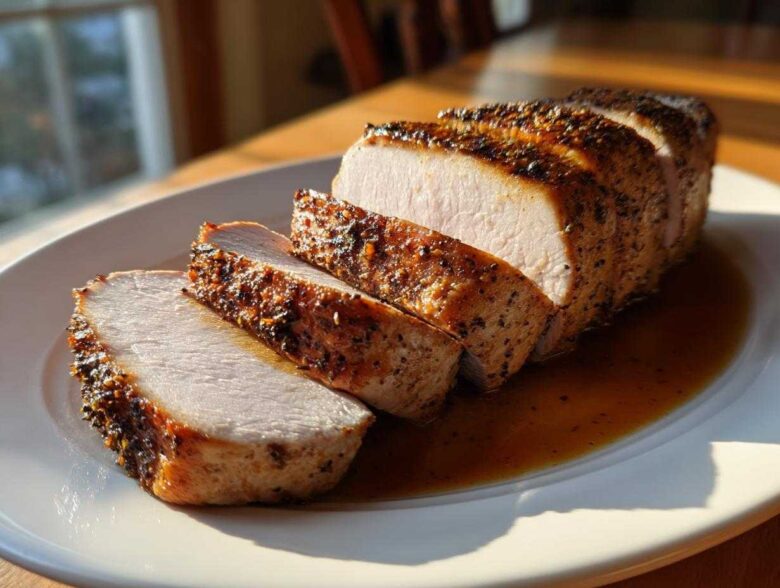
Richard still talks about the smells when we lived in the Basque country—the air always seemed heavy with rosemary and woodsmoke. That memory, simple and profound, reminds me why we always return to a perfectly seasoned roast. After forty years of collecting flavors across the globe, we discovered that sometimes the greatest meals are the ones we make right here at home. This pork loin roast recipe is our ultimate keeper. It delivers the most incredibly juicy pork loin with hardly any fuss, making it ideal for a quick weeknight dinner or a relaxed sunday roast recipe on a quiet afternoon. Honestly, it’s the only one you’ll ever need. We poured decades of kitchen knowledge into making this formula foolproof; you can read more about how we started this journey in our story here.
Why This Juicy Pork Loin Roast is Your New Favorite Easy Pork Dinner
I often tell Eleanor, if a recipe takes more effort than it gives back in joy, we don’t need it, and this pork loin roast is pure joy with very little work! That’s the whole point here. We streamlined the process so you get that spectacular, fall-apart tender result without spending all day fussing. We’re talking about guaranteed moisture; this is truly a recipe for a juicy pork loin every single time you try it.
The seasoning blend is simple, yet it elevates the pork beyond what you expect from such minimal effort. It’s our go-to when we need something impressive that doesn’t stress us out.
Perfect for a Sunday Roast Recipe or Weeknight Dinner
This recipe truly is flexible. Because we use a two-stage roasting method, you start high to get that nice exterior color and then drop the heat to cook through gently. That means the total active time is minimal, which is heaven for a hectic weeknight dinner. But don’t let the simplicity fool you; the rich herbs and great crust make this the perfect anchor for a relaxed sunday roast recipe, too. Even if you’re just learning your way around roasting, the visual cues and the built-in resting stage mean you can’t really go wrong.
Ingredients for the Perfect Pork Loin Roast
Richard is so meticulous about ingredients, which is why I always trust him when we gather what we need for a lovely pork loin roast. For this simple preparation, you really only need seven items for the meat itself. Don’t fret about a long shopping list; this is truly straightforward. We need three pounds of pork loin roast, ideally bone-out, so it cooks a bit more evenly. Then we bust out the olive oil—two tablespoons will do the trick—just to slick the surface so the herbs stick nicely.
The simple seasoning blend is where the magic begins. You’ll need one level tablespoon of kosher salt because we aren’t messing around with flavor here! Follow that up with one teaspoon each of black pepper, dried thyme, and garlic powder. Finally, just about half a teaspoon of dried rosemary brings that gorgeous, woodsy scent we remember from all those European farmhouses. We mix those dry spices together first, pressing them firmly onto the oiled surface of the roast.
Ingredient Notes and Substitutions for Your Pork Loin Roast
Now, a quick word on those herbs! The dried thyme and rosemary are lovely because they form a tenacious crust when they hit that high initial heat. If you only have fresh herbs—and sometimes I prefer the brightness of fresh—you’ll want to double the amount you use. For example, use two teaspoons of fresh, chopped rosemary instead of one teaspoon dried.
My most important cooking marriage-vow to you, dear reader, is this: you absolutely must pat the meat dry. I mean bone-dry, soak-it-with-paper-towels dry! If the surface of the pork loin roast is damp, all you’ll do is steam the outside instead of getting that beautiful, flavorful crust we are aiming for. No exceptions allowed on this step; it’s the foundation of a great pork loin roast.
How to Prepare Your Oven Roasted Pork
Alright, let’s get this beautiful pork loin roast into the oven! Trust me, the method we use here for oven roasted pork is the secret weapon for getting that perfect, rosy interior without drying out the edges. First things first, crank your oven up high to 425 degrees Fahrenheit. We want heat, fast! Remember how I stressed patting the meat dry? Do that right now. Grab those paper towels and really blot every inch of that roast until it feels almost dusty—this is non-negotiable for getting a proper sear.
Next, brush the whole thing with your olive oil so our spice mix has something to cling to. Then, sprinkle and lovingly press that herb blend we mixed earlier all over the roast. Place it neatly in your roasting pan. Now comes the high heat blast. We roast it hard at 425°F for just 15 minutes. That initial jump-start gives us color and flavor.
After those 15 minutes, the important shift happens! Reduce that heat straight down to 350 degrees Fahrenheit. This gentle cooking phase is what ensures you end up with that melt-in-your-mouth texture. If you ever want an amazing side dish to go with this roast, check out my pork roast with vegetables recipe—they cook beautifully together!
Achieving the Ideal Pork Loin Internal Temp
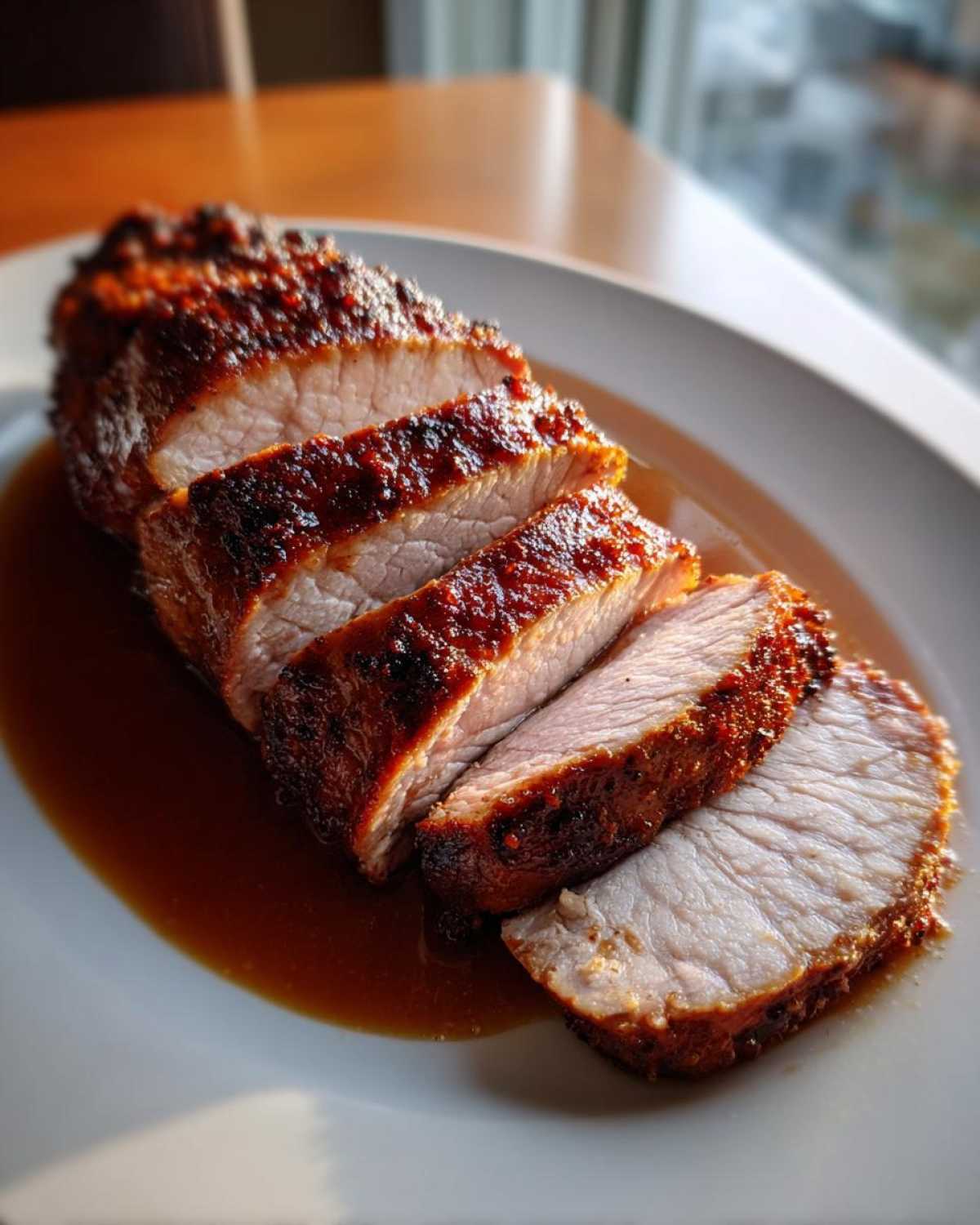
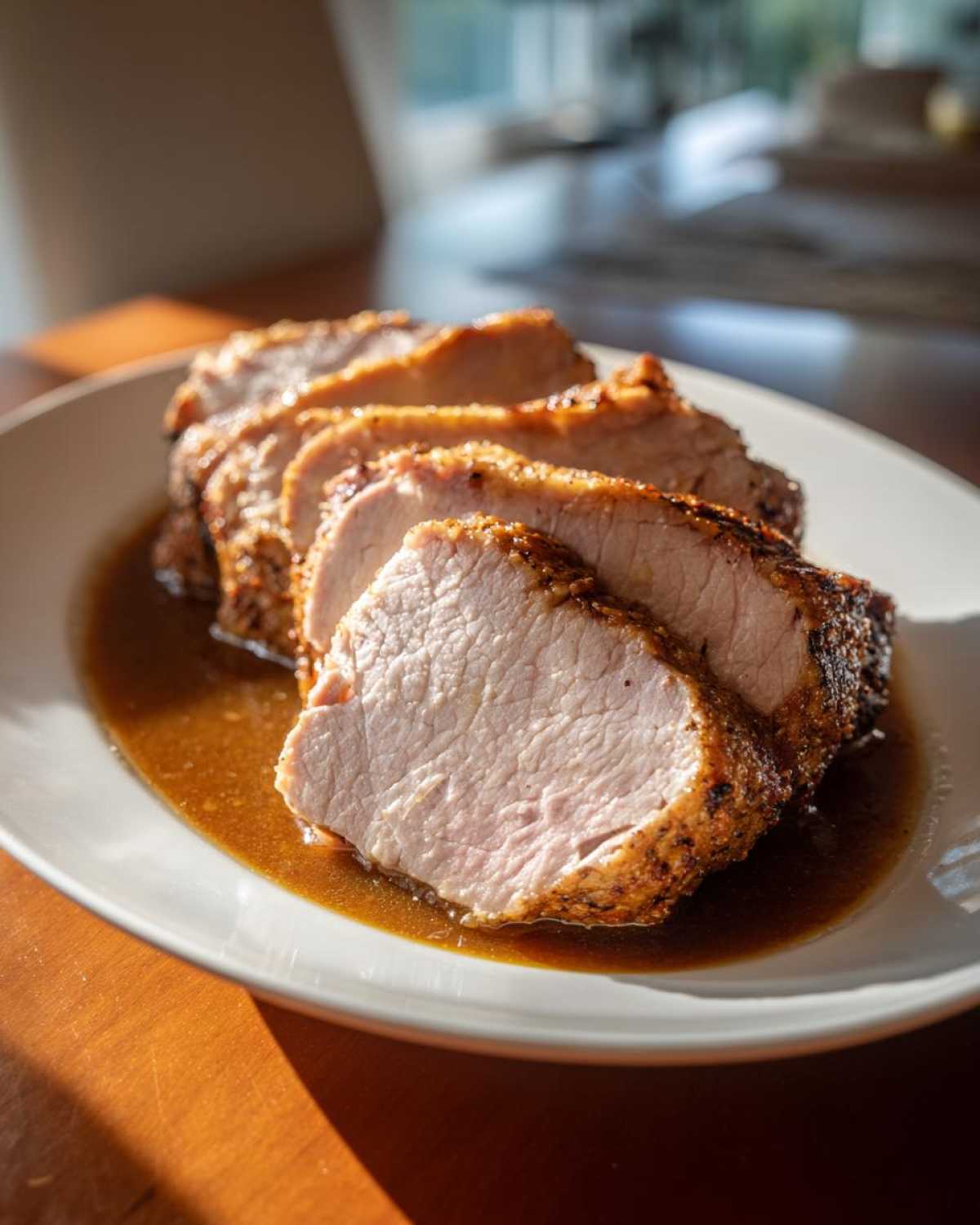
Listen to me now, dear reader: you cannot achieve a perfectly juicy pork loin without an instant-read thermometer. You just can’t. Forget those vague guides about time per pound; every oven is different, and every roast has a unique thickness. You must rely on the thermometer inserted into the thickest part of the meat. We are pulling this roast out of the oven the *very second* that thermometer reads 145 degrees Fahrenheit. That 145°F is the USDA safe minimum, and honestly, cooking to that spot leaves the pork tender and pinkish, which is exactly how we want it!
The Essential Resting Period for a Juicy Pork Loin
This next step is where new cooks lose all their hard-earned progress. When the roast hits 145°F, get it out! Transfer it immediately to a cutting board and tent it loosely with foil. You need to wait at least 10 minutes. Ten minutes! Richard almost caused a minor marital incident years ago when he carved a roast after only two minutes of rest. The juices just ran everywhere onto the cutting board, leaving the meat dry. Resting allows those internal juices—which were agitated by the heat—to settle back down into the muscle fibers. If you skip this, you are robbing yourself of that promised juicy pork loin!
Making a Quick Pan Sauce Gravy for Your Pork Loin Roast
Now that the roast is resting—and please, I mean resting patiently for those ten minutes!—we can turn those gorgeous bits left in the roasting pan into liquid gold. This step is what separates an okay dinner from a memorable sunday roast recipe. We’re making a lightning-fast pan sauce gravy, and you don’t even need to wash the pan!
Take your roasting pan, and if it’s oven-safe, put it right back on the stovetop over medium heat. If your pan isn’t stovetop safe, don’t worry, just pour those drippings into a small saucepan. See all those dark, browned bits stuck to the bottom? Those are flavor bombs! Pour in about one cup of chicken broth—use good quality broth if you have it, it makes a difference—and immediately start scraping the bottom with a wooden spoon. That scraping action releases all that roasted flavor right into your broth. That’s deglazing, and it’s so satisfying to watch come together.
Let that mixture simmer for about three to five minutes. You want the volume to reduce a bit; it thickens slightly as it cooks down. I always follow our old friend Chef Auguste’s trick here: once it’s bubbling nicely, I whisk in one single tablespoon of cold butter right at the very end. Don’t boil it after adding the butter! Whisking it in cold creates an emulsification, giving your simple pan sauce gravy a lovely, richer texture without turning it into a heavy, flour-based mess. If you want more ideas on making killer sauces, check out my notes on creamy gravy control—but honestly, this simple pan sauce is perfection for this pork loin.
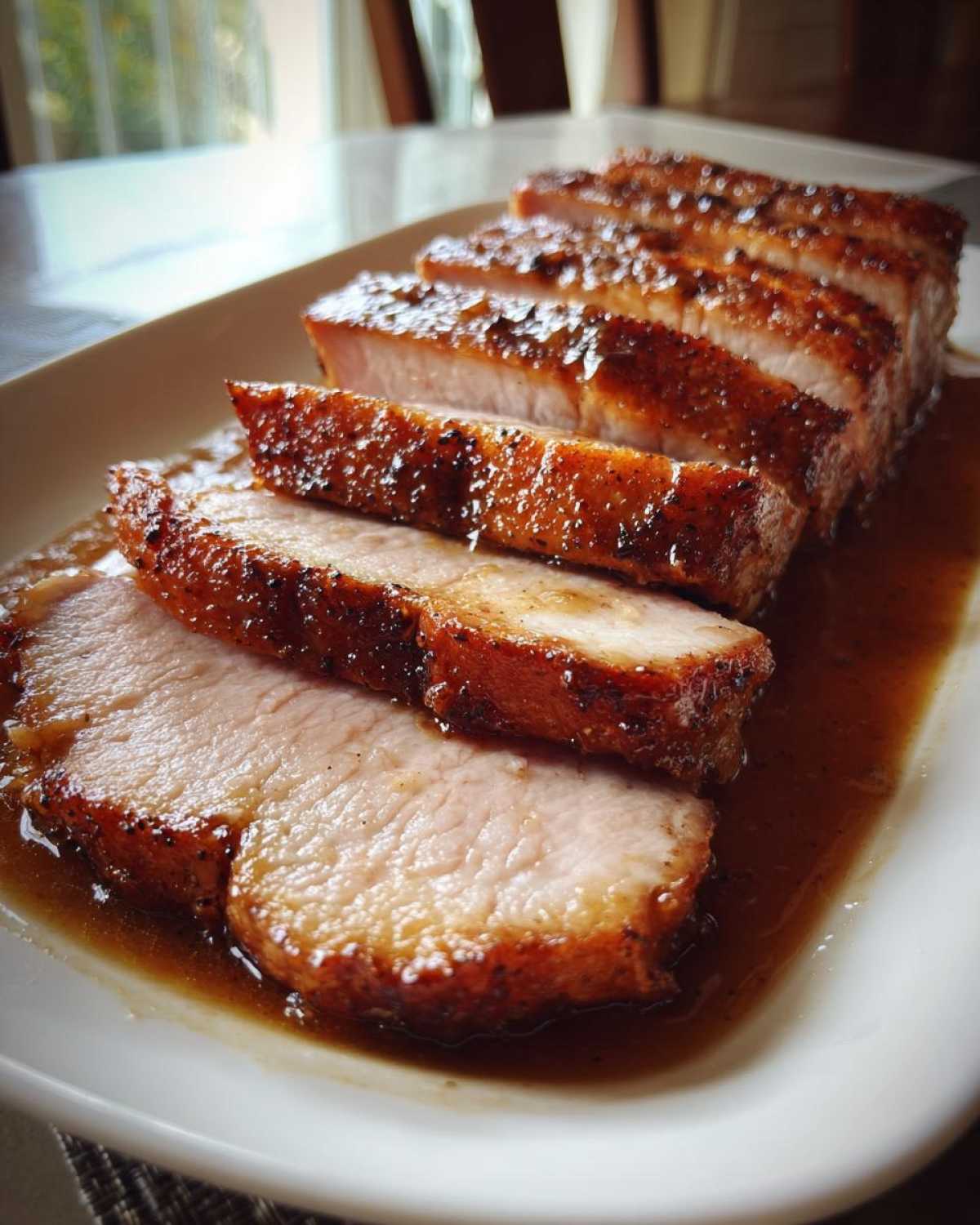
Drizzle that warm, savory sauce right over your sliced pork loin. It’s unbelievably good!
Tips for Success with Your Pork Loin Roast
We’ve mastered the heat and the rest, but here are a few little tricks we collected over the years that really guarantee success on this pork loin roast. Think of these as our personal secrets for consistently great results.
First off, take the meat out early. I mean it. Don’t pull your roast from the fridge three minutes before seasoning. Give it at least 30 minutes on the counter to come up toward room temperature. This tempering step ensures the center starts cooking at the same speed as the outside. If it’s ice cold, the outside will dry out waiting for the middle to catch up!
Second, do you want that restaurant-quality crust? If you have a nice oven-safe skillet, use it! Before you even think about preheating the oven, sear that seasoned roast aggressively on all sides in hot oil until it’s deeply browned. Then, transfer the whole skillet right into the preheated 425-degree oven. That pre-sear locks in so much flavor.
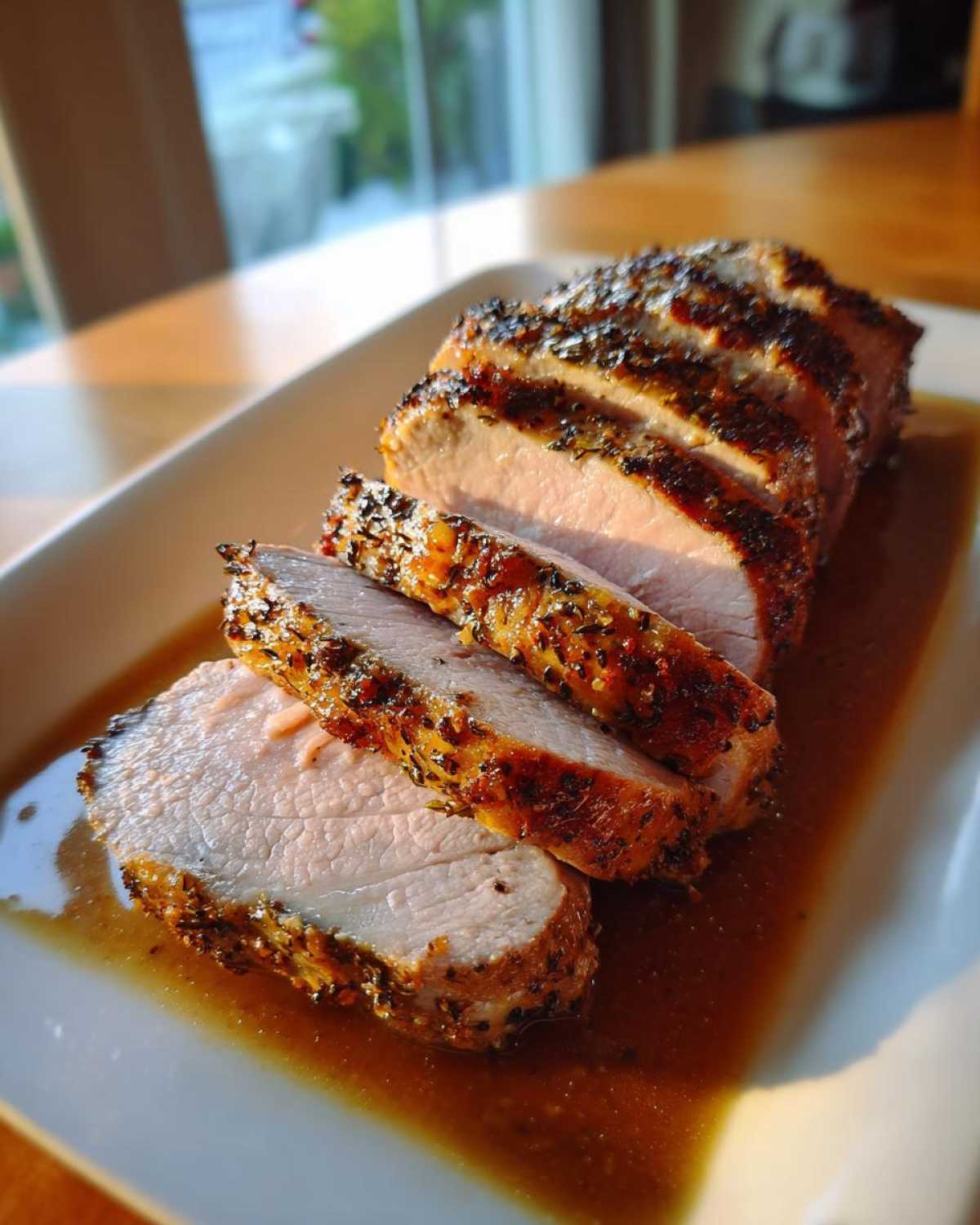
If you don’t have a thermometer—though I highly recommend getting one, it’s a lifesaver—remember the general timing rule. For a three-pound roast, after that initial 15-minute blast, expect about 50 to 60 minutes total cooking time at 350°F. But please, check the blog when you have a moment; we have other great recipes right here!
Serving Suggestions for This Easy Pork Dinner
A beautiful roast like this deserves side dishes that feel comforting but don’t demand all your attention while the pork is resting. Since this is such an easy pork dinner to pull off, we like to pair it with classics that soak up that lovely pan sauce gravy we just made.
My number one suggestion, always, is roasted root vegetables. Think carrots, parsnips, and maybe some sweet potatoes tossed with a little olive oil and salt. You can roast those right alongside the pork after you drop the temperature down to 350°F, or you can toss them in for the last 30 minutes. They come out caramelized and sweet, which balances the savory herbs on the pork perfectly.
Of course, you can never go wrong with a creamy starch. Richard insists that nothing beats silky mashed potatoes because they are the ultimate vehicle for that delicious pan sauce gravy. If you want a slightly fancier—but still straightforward—side, try our recipe for classic scalloped potatoes. They bake beautifully while the pork is in the oven doing its thing. Really, once you have the main star perfected, serving it well is the easy part!
Storage and Reheating Instructions for Leftover Pork Loin Roast
If you’re lucky enough to have any leftovers from this incredibly juicy pork loin—and it is delicious the next day, trust me—storage is simple! Let the slices cool completely, and then pack them tightly into an airtight container. You want to keep all that precious moisture locked in. Don’t just toss it uncovered in the fridge, or it will certainly dry out.
When you’re ready for round two, the key is gentle heat. Place your sliced pork in a small oven-safe dish, add just a splash of broth or even a teaspoon of water, and cover it tightly with foil before heating it in a low oven, say 300 degrees. This steams the meat slightly and keeps it tasting nearly as tender as the first time around. It’s the best way to enjoy an easy pork dinner encore!
Frequently Asked Questions About Your Pork Loin Roast
Richard and I always say that the best recipes are the ones that answer all your little worries right up front. If you’ve got a question buzzing around your head about making this pork loin roast perfect, odds are, someone else has the same one! We’ve gathered the most common concerns our friends ask us about perfecting their oven roasted pork.
Can I cook this pork loin roast from frozen?
Oh, honey, please don’t try that! If you put a frozen roast straight in the oven, by the time the center thaws enough to start cooking, the outside will be dry, tough, and just sad. For this method to work its magic—especially that quick high-heat blast—the meat needs to be tempered. Remember what I said? Pull that roast out of the fridge about 30 minutes before you plan to season it. That little bit of time makes a massive difference in how evenly your pork loin roast cooks.
What is the correct pork loin internal temp for medium-rare?
This is where a good thermometer pays for itself! When we talk about the perfect result for a juicy pork loin, we are aiming for 145 degrees Fahrenheit. Now, I know some folks remember being told pork had to be cooked until it was totally white, but the USDA guidelines changed that ages ago! Hitting 145°F ensures it’s perfectly safe, but it will have a sweet, slightly rosy pink center. That pinkness is just retained moisture, my dear—it’s the sign of a successful, tender cook!
How do I prevent my oven roasted pork from drying out?
If you’re worried about drying out your beautiful oven roasted pork, you need to pay attention only to two critical phases of this recipe. First, that initial 15 minutes at 425°F is just for the crust; you must drop the temperature down quickly to 350°F so the inside cooks gently toward that magic 145-degree mark. Second, and I cannot say this enough, you must rest it! Ten minutes tented under foil after it comes out builds back that moisture. Skipping the rest is like throwing away half your beautifully cooked roast!
Estimated Nutritional Data for This Pork Loin Roast
Richard and I always try to keep a general idea of what we’re eating, especially when serving this up for a regular easy pork dinner. Knowing the numbers helps when planning meals for the week! Remember, all these figures are just estimates based on the ingredients we use here for our three-pound roast, divided into six standard servings. Your portion size, or the exact cut of meat you buy, will change things just a touch.
Here is a general look at what you can expect in a four-ounce serving of this lovely, tender roast:
- Calories: 320
- Fat: 15g
- Saturated Fat: 5g
- Unsaturated Fat: 10g
- Trans Fat: 0g
- Protein: 44g
- Carbohydrates: 1g
- Fiber: 0g
- Sugar: 1g
- Cholesterol: 110mg
- Sodium: 450mg
The high protein content is one of the things Richard loves about a simple pork loin roast; it truly keeps you feeling satisfied long after dinner. Just be mindful of that sodium count, as some of that comes from the Kosher salt we use to build that incredible crust on our oven roasted pork. Enjoy every bite!
PrintJuicy Oven Roasted Pork Loin Roast
Follow this simple recipe for a tender and juicy pork loin roast cooked perfectly in the oven, complete with instructions for a quick pan sauce.
- Prep Time: 10 min
- Cook Time: 60 min
- Total Time: 70 min
- Yield: 6 servings
- Category: Dinner
- Method: Oven Roasting
- Cuisine: American
- Diet: Low Fat
Ingredients
- 3 lb pork loin roast, bone-out
- 2 tablespoons olive oil
- 1 tablespoon kosher salt
- 1 teaspoon black pepper
- 1 teaspoon dried thyme
- 1 teaspoon garlic powder
- 1/2 teaspoon dried rosemary
Instructions
- Preheat your oven to 425 degrees Fahrenheit.
- Pat the pork loin roast completely dry using paper towels. This helps create a good crust.
- In a small bowl, mix together the kosher salt, black pepper, dried thyme, garlic powder, and dried rosemary.
- Rub the entire surface of the pork loin roast evenly with the olive oil.
- Sprinkle the spice mixture over the oiled pork loin, pressing gently so the seasoning adheres.
- Place the seasoned roast in a roasting pan or on a rimmed baking sheet.
- Roast at 425 degrees Fahrenheit for 15 minutes.
- Reduce the oven temperature to 350 degrees Fahrenheit. Continue roasting until an instant-read thermometer inserted into the thickest part registers 145 degrees Fahrenheit. This usually takes about 15 to 20 minutes per pound after the initial high-heat blast.
- Remove the pork loin roast from the oven when it reaches 145 degrees Fahrenheit internal temp.
- Transfer the roast to a cutting board, tent loosely with foil, and let it rest for at least 10 minutes before slicing. Resting is key for a juicy pork loin.
- While the pork rests, make a quick pan sauce: Place the roasting pan over medium heat on the stovetop. Add 1 cup of chicken broth to the pan drippings, scraping up any browned bits from the bottom. Let it simmer for 3 to 5 minutes until slightly reduced. You can whisk in 1 tablespoon of cold butter at the end for richness.
- Slice the pork loin against the grain and serve immediately with the pan sauce gravy.
Notes
- For the best results, take the pork out of the refrigerator about 30 minutes before you plan to cook it.
- If you prefer a deeper crust, you can sear the roast on all sides in a hot, oven-safe skillet before placing it in the oven.
- If you do not have an instant-read thermometer, a 3-pound roast typically takes about 50 to 60 minutes total cooking time after the temperature reduction.
Nutrition
- Serving Size: 4 oz cooked
- Calories: 320
- Sugar: 1
- Sodium: 450
- Fat: 15
- Saturated Fat: 5
- Unsaturated Fat: 10
- Trans Fat: 0
- Carbohydrates: 1
- Fiber: 0
- Protein: 44
- Cholesterol: 110