

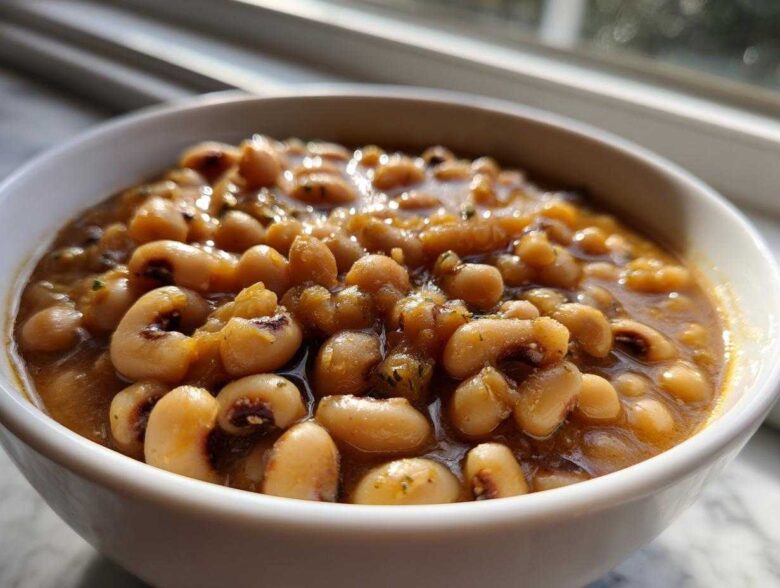
If you’re chasing that deep, comforting flavor that only good old Southern cooking delivers, you’ve come to the right place. Forget bland, watery legumes! We’re talking about achieving those rich, smoky black eyed peas that are tradition on a plate, especially when New Year’s rolls around for good luck. I’ve spent years trying every trick in the book, tweaking seasoning blends and meat choices until I finally nailed the absolute best version of this classic. This recipe delivers that hearty texture and smoky depth every busy cook needs, all in one pot!
Why You Will Love This Classic Southern black eyed peas Recipe
Honestly, this recipe isn’t just food; it’s tradition simmering on the stove! We keep it simple because the flavor does all the heavy lifting. You don’t need fancy equipment or hours of soaking time—I promise you can whip this up on a weeknight if you need a hearty side dish.
Here’s why you’re going to stick this recipe right into your favorites file:
- Perfectly Smoky Flavor: Thanks to the ham hock or bacon, these peas soak up the best smoky notes. It just tastes like home, you know?
- Hearty and Satisfying: They are rich enough to be the star of the show, but they shine brightest as the ultimate comfort food side dishes.
- New Year’s Tradition Made Easy: For good luck in the coming year, you need this New Year’s black eyed peas recipe ready to go. It’s the ultimate one-pot preparation!
If you want to see more of my favorite comfort recipes, check out my main blog page here: More Comfort Food Goodness.
Essential Ingredients for Traditional black eyed peas
When it comes to making my authentic Southern black eyed peas recipe, you can’t cheat the base flavors. It’s all about quality starting materials, even if we are only using simple, hearty legume recipes. Don’t even think about grabbing canned ones—dried is the way to go for that true texture!
First things first: The black eyed peas themselves. You’ll need a full pound of dried ones. And here’s the first piece of advice that saves you time: You do not need to soak these overnight! I know some recipes tell you to, but for this stovetop method to get that perfect tenderness, we skip the soak. Just give them a quick rinse!
Now for the flavor powerhouse. You have options, so pick the one that calls to you:
- The Meat: Grab 4 ounces of either a smoked ham hock (for the true, deep flavor that sticks to your ribs) or some nice thick pieces of bacon. The saltiness and smoke infuse everything beautifully.
- The Trinity: We need the classic aromatic base. That means 1 medium yellow onion, chopped; 2 celery stalks, chopped; and 1 green bell pepper, chopped.
- The Seasoning Team: Don’t forget 2 cloves of garlic, minced (we add this late so it doesn’t burn!), 1 teaspoon of dried thyme, and that crucial bay leaf.
Finally, we need liquid—6 cups of chicken broth or even just water works. And please, when you taste them near the end, have that salt, pepper, and that optional tablespoon of apple cider vinegar ready. That vinegar is our secret weapon for brightness, especially after simmering with heavy smoked meat!
Need another smoky side dish idea that works great alongside these? Check out my recipe for New Potatoes, Green Beans, and Ham—it uses similar flavor profiles!
How to Cook Tender and creamy black eyed peas
This is where the magic happens, friends! Learning how to cook black eyed peas the traditional way is learning a bit of patience, but honestly, the cleanup is minimal since we are doing this all in one pot. We want those tender, melt-in-your-mouth peas that are swimming in just the right amount of smoky, savory broth. If you’re looking for the secret to that incredible, thick sauce, trust me, it comes at the very end!
Prepping the black eyed peas and Aromatics
First, we prep. Rinse your dried peas really well under cold running water. I always pick through just quickly to make sure no tiny pebbles snuck in—don’t skip this, even if you aren’t soaking them! Since this is our one pot black eyed peas method, we can keep it super simple.
Grab your big Dutch oven. If you’re using bacon or ham hock, toss that in first over medium heat until it starts to render out some of that gorgeous fat. Then, toss in your chopped onion, celery, and bell pepper—that’s the Southern trinity right there! Let those sweat down for about five good minutes until they start to smell sweet. Then, add your rinsed peas, the broth, thyme, and the bay leaf right on top. Give it a good initial stir to combine everything.
Simmering for Perfect Southern black eyed peas recipe Texture
Now we wait! Bring that big pot up to a rolling boil over high heat. As soon as it starts bubbling hard, knock that heat way down to low. Cover the pot, but leave the lid slightly cracked open just in case, and let it simmer away. This process takes between 1 to 1.5 hours. You must stir it every 20 minutes or so, just to make sure nothing is sticking to the bottom and scorching.
When you are about 15 minutes out from what you think is ‘done,’ toss in your minced garlic. We wait on the garlic because if you add it too soon, it gets kind of bitter! I remember the first time I made these—I pulled them out too early, and they were a bit tough. I tasted them, panicked, and put the lid back on and let them go another half hour, and wow! That’s when they finally softened up and became that dreamy texture. That’s when you’ll know you’ve achieved that Southern black eyed peas recipe texture goal.
Finally, fish out the bay leaf and the main ham hock bone (shred that meat off and add it back in!). Now for the trick to get those naturally creamy black eyed peas: Take about a quarter cup of the cooked peas, mash them right against the side of the hot pot with the back of your spoon, and stir that paste back into the liquid. It thickens up the broth beautifully without needing any flour or cornstarch! You can find another creamy favorite here: One Pot Creamy Sausage Gnocchi.
Tips for the Best black eyed peas Side Dish
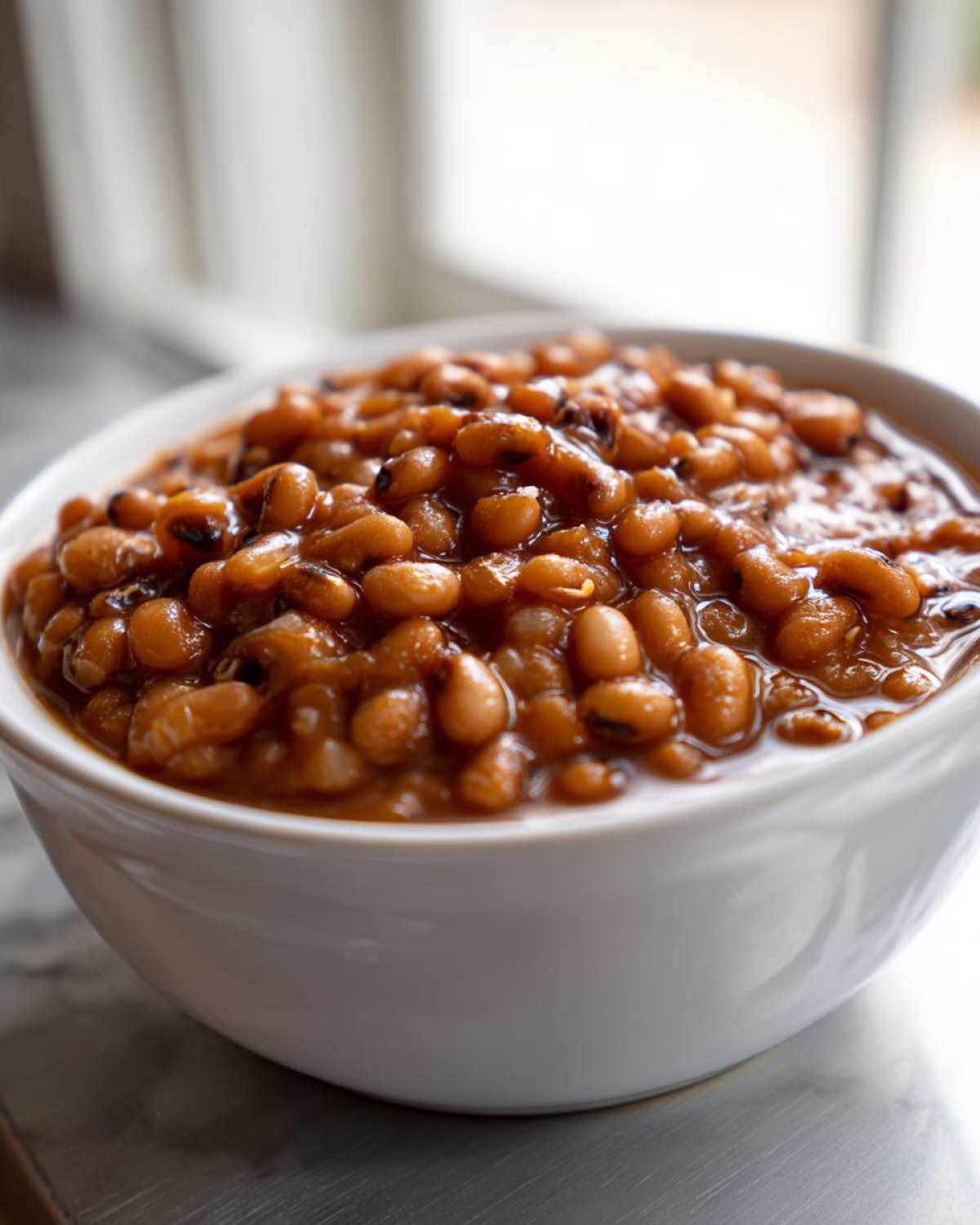
Now that you’ve got your tender peas, let’s tweak them into absolute perfection! This is the stuff Grandmas taught me—the little things that separate a good pot of peas from a *great* one. If you are aiming for that next-level smoky black eyed peas flavor profile, you have to pay attention to the finishing touches.
First, the texture: If, after the 90 minutes, your broth is still a little too thin for your liking—maybe you want them thicker like a stew, or you skipped the mashing trick—just pull the lid off the pot completely for the last 15 to 20 minutes of cooking. Let that moisture evaporate! It concentrates the flavor too, which is a win-win.
Second, brightness! Don’t skip the apple cider vinegar at the very end, even if you only use a teaspoon. Those smoky, earthy flavors need that little pop of acid to wake them up. Taste them right before serving, and if they taste a little dull, add a splash. It makes the whole dish sing. It’s funny how much flavor you can build into a simple black eyed peas side dish with just a splash of something sharp!
I love pairing these with something sweet, like my Honey Mustard Chicken Thighs. The sweetness plays so well against the ham hock in the peas.
Achieving Maximum Smoky Flavor in black eyed peas
If you’re following the vegan black eyed peas route, you might think you’re stuck with just broth flavor, but nope! We’re adding smoke back in. The recipe mentions liquid smoke, but honestly, I prefer smoked paprika. It gives you that deep, reddish hue and a very authentic woody smoke flavor.
When you toss in your dried thyme and bay leaf, go ahead and sprinkle in about a teaspoon and a half of smoked paprika. Stir it well when you cover the pot to simmer. That paprika will bloom in the heat and infuse every single pea with that wonderful, deep smoky essence—it’s seriously convincing enough that folks won’t miss the meat at all!
Variations: Vegan black eyed peas and Slow Cooker black eyed peas
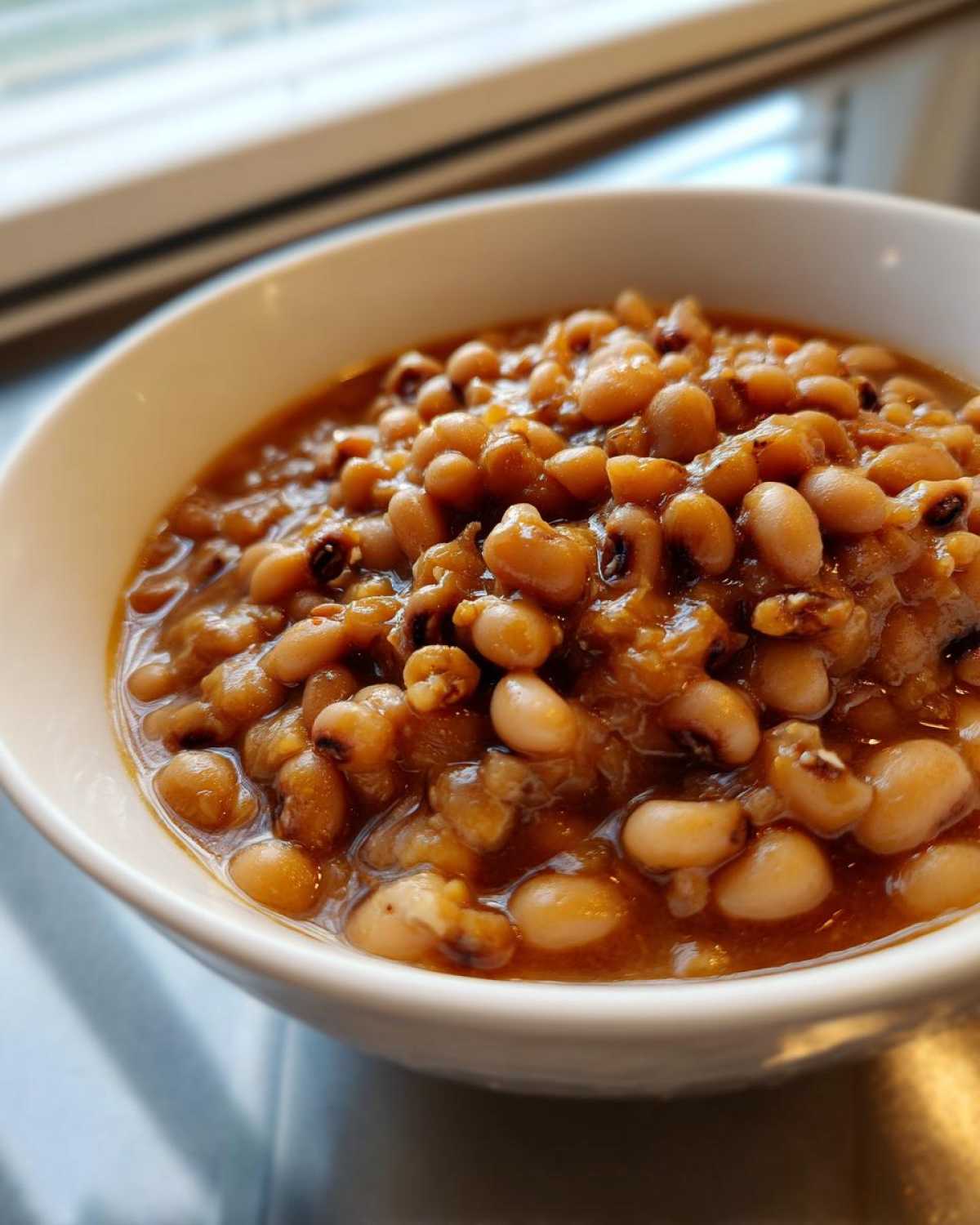
I know not everyone makes their pot of peas with ham hocks or bacon, and that’s perfectly fine! My goal is to get everyone the best, most flavorful pot of black eyed peas possible, no matter what your pantry looks like or how much time you have. This traditional recipe is super adaptable, which is one of the reasons I love it so much. We can easily switch this up for a vegetarian meal or set it and forget it in the slow cooker!
If you’re looking for a time-saver that lets you get your whole dinner assembled before you leave for work, the slow cooker version is a lifesaver. And if you’re serving a crowd with different dietary needs, making small batches of vegan black eyed peas is a breeze!
Making Vegan black eyed peas
When we take out the smoky meat, we absolutely have to bring that smoky flavor back in somehow, right? It’s the backbone of the Southern flavor profile! So, the first swap is easy: ditch the chicken broth and use vegetable broth instead. If you only have water, that’s fine too, you’ll just need to be a little heavier with the seasonings later.
For the meat replacement—and this is key—you need to replace the depth. You have two great options, according to my notes:
- Liquid Smoke: Use about one teaspoon mixed into the broth before you start simmering. Be careful, a tiny bit goes a long way! You want smoke, not swimming pool water, you know?
- Smoked Paprika: This is my preferred way. Swap out the regular salt/pepper for about 1.5 teaspoons of smoked paprika when you add the thyme. It gives a rich color and a lovely woody note.
Make sure you still add the aromatics (onion, celery, pepper) so you get that nice vegetable base cooking down—that helps bolster the flavor profile when there’s no meat fat rendering.
Easy black eyed peas in the Slow Cooker
I love my slow cooker, especially around the holidays when the oven is packed, and I need hands-off time. Preparing these easy black eyed peas in the Crockpot couldn’t be simpler, honestly. You just dump everything in and walk away!
Combine everything—the rinsed peas, the ham hock or bacon, the trinity vegetables, seasonings, and the broth—directly into the slow cooker insert. Give it one big stir to make sure everything is submerged nicely. Close the lid and set it. If I’m making these for a New Year’s brunch, I usually set it on LOW for 6 to 8 hours. If you realize late in the morning you need them by dinnertime, crank it to HIGH for 3 to 4 hours.
Remember, the apple cider vinegar brightens things up, so only stir that in right before you serve them. No need to mash any peas if you’re going the slow cooker route; they tend to break down a bit more naturally on that long cook time, giving you a thicker result anyway!
If you do a lot of slow cooker meals, you might want to check out my tips for Slow Cooker Mississippi Chicken—it’s a game-changer for weeknights!
Serving Suggestions for Traditional black eyed peas
Okay, so you have this magnificent pot of rich, smoky, perfectly seasoned black eyed peas. Now what? These aren’t just any peas; they are the foundation of a true Southern spread! You’ve got to pair them with dishes that can handle that bold, savory flavor. Truly, they are the workhorse of all soul food recipes.
For me, they absolutely must meet fluffy, slightly sweet cornbread. You need that bread to soak up every last bit of that delicious broth that forms at the bottom of the pot. Don’t skimp on the side dishes!
I always serve mine alongside some slow-braised collard greens—the tanginess of the greens cuts right through the richness of the peas and the meat fat. And if you want the full New Year’s experience, you load them right over a scoop of steaming white rice. If you’re looking for the best bread pairing to soak up all those juices, you should try my recipe for Flaky Buttermilk Biscuits. Those are next level!
Storage and Reheating black eyed peas
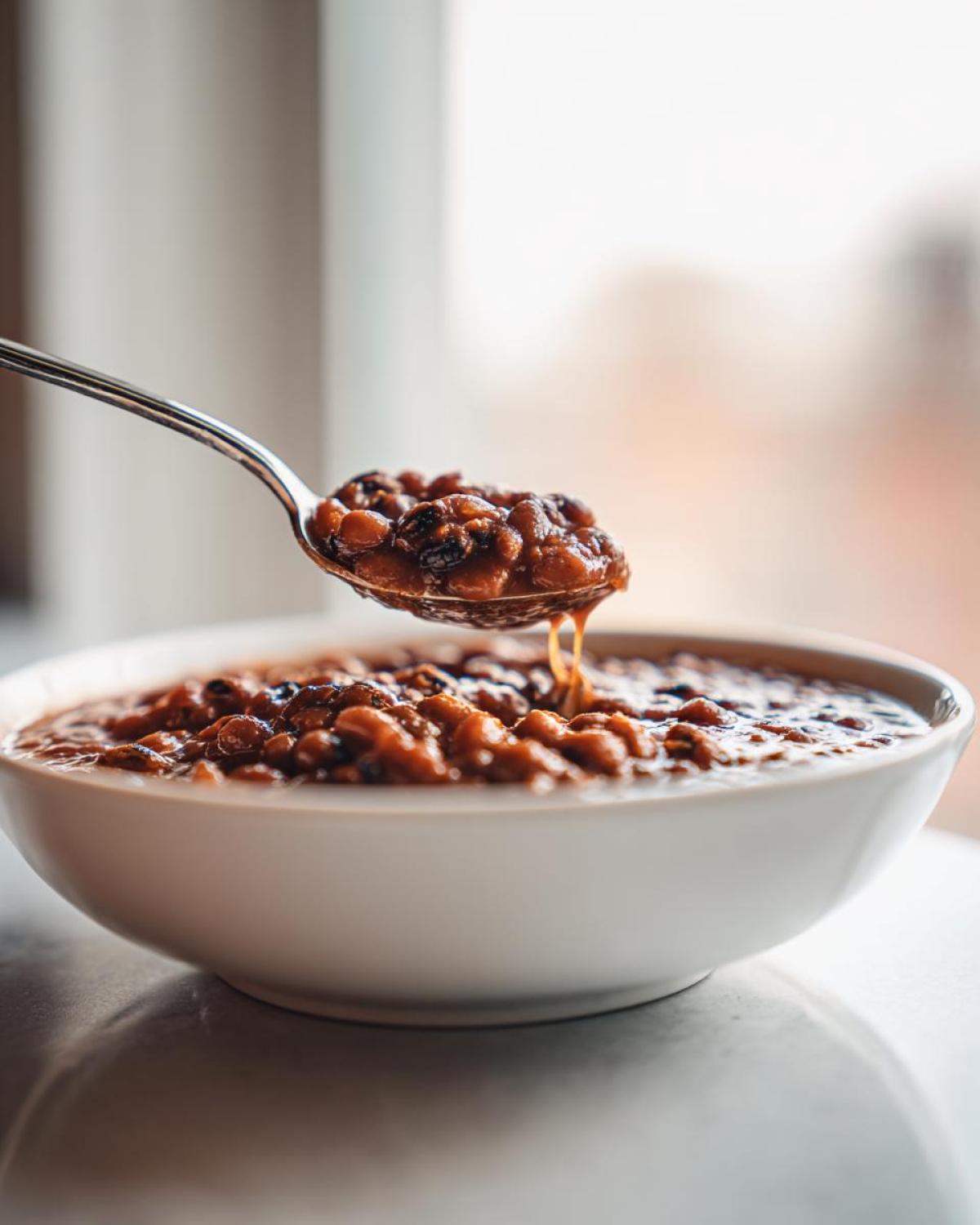
I always make a huge batch because, frankly, these taste even better the next day! Leftovers are just as important as the initial pot, so you need to know how to treat them right so they don’t turn into mush when you reheat them. Proper storage guarantees you get to enjoy that perfect balance of smoky flavor and tender texture again and again.
Let your pot cool down to room temperature before you cover it up. If you stick a big pot of steaming hot food straight into the fridge, it can mess up your fridge temperature, and we don’t want that! Once cooled, transfer the black eyed peas into an airtight container. They look great in any container, but I just use whatever Tupperware I have handy.
In the refrigerator, these beauties will stay perfectly delicious for a solid 4 to 5 days. See? That means you’ve got your lunch or quick side dish sorted for most of the work week!
Now, reheating them is where a lot of people go wrong, especially if you want to maintain that lovely light broth consistency we worked so hard to achieve. You need to cheat a little bit!
Stovetop Reheating for Best Results
The absolute best way to reheat is slowly on the stovetop. Take out the amount you plan to eat and toss it into a saucepan. Since they tend to thicken up quite a bit in the fridge, you must replenish the liquid! Stir in a splash of broth or even just water, maybe a tablespoon or two to start.
Heat it gently over medium-low heat. You want to bring it up to temperature slowly, stirring every minute or so. This prevents the bottom from scorching while the middle is still cold. If you are tasting them and they seem to have lost a bit of their zing after a few days, this is the perfect time to add another little dash of that apple cider vinegar for brightness, just like we did the first time!
Quick Microwave Reheating Tips
I’m not going to lie; sometimes I’m lazy, and the microwave wins. If you use the microwave, you absolutely have to add liquid before heating! If you microwave them as is, they will seize up and turn dry and pasty—we want creamy black eyed peas, not concrete!
Put your portion in a microwave-safe bowl, add a splash of broth, cover it loosely with a paper towel (that helps trap some steam!), and heat in short 60-second bursts, stirring well in between. Keep testing until they are hot all the way through. This method is fast, but you lose a touch of that deep, slow-simmered character, so use the stovetop if you have the extra ten minutes!
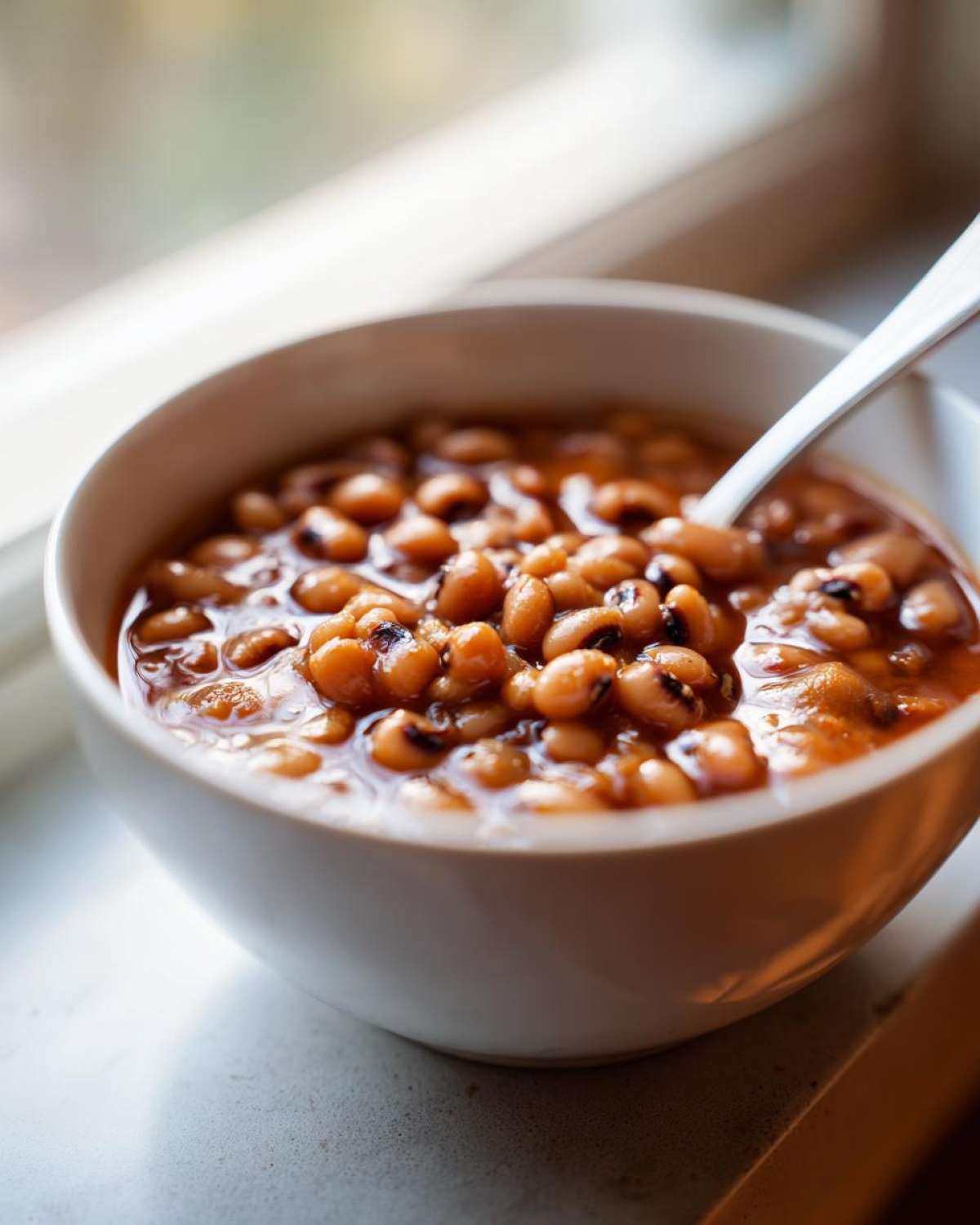
Frequently Asked Questions about black eyed peas
I always get questions about this recipe because folks want to get it just right, especially when making that traditional New Year’s meal! Here are the most common things people ask me about getting these traditional black eyed peas perfect every single time.
Can I substitute bacon for ham hock in this Southern black eyed peas recipe?
Oh, absolutely! Bacon is a fantastic stand-in for the ham hock, and depending on what you have in the fridge, it might even be easier. Bacon gives you that immediate, salty, smoky flavor right at the start when you render the fat. It’s excellent for a quicker flavor infusion, which is great if you are doing the easy black eyed peas method.
Now, if I’m being totally honest, nothing beats the deep, heavy, gelatinous body that a smoked ham hock lends to the pot over that longer cooking time. The ham hock really enriches the broth and gives you that super hearty feeling. So, bacon gives you great immediate flavor, but the ham hock gives you a deeper, richer foundation. Both make amazing soul food recipes, though!
What is the best way to make creamy black eyed peas without mashing?
That’s a tough one to answer for this specific recipe, because honestly, mashing a little bit of the peas is the absolute best trick for naturally thickening the pot! When you mash those cooked peas against the side of the hot pot, you are releasing all those starches right back into the broth, and it turns that liquid into a wonderfully thick, luxurious sauce. That’s the secret to authentic, creamy black eyed peas!
If you absolutely, positively refuse to mash any of them—maybe they are just too pretty in the pot!—your only other option to thicken things up is to remove the lid during the last 20 minutes of simmering. This allows the water to evaporate and concentrates the natural starches left on the peas. Just be very careful not to let them cook down too much, or you’ll end up with a thick paste rather than a slight sauce.
Do I really have to use meat for good luck on New Year’s?
That’s where tradition comes in! The general Southern belief is that the coins of the new year are represented by the light-colored peas, and the pork (bacon or ham hock) represents prosperity because hogs root forward. So traditionally, yes, meat is usually involved for that specific good luck factor in your New Year’s black eyed peas recipe.
However, this recipe is so incredible that it will bring you luck even without the ham hock, especially if you use smoked paprika or liquid smoke in the vegan black eyed peas version! The main thing is getting that texture right and eating them on January 1st. If you want to chat more about other recipes or have specific questions about substitutions, you can always reach out to me here: Contact Me.
Can I just cook these from dried without soaking?
Yes, you can, and that’s what this recipe is set up for! One thing I always try to do is save folks time where I can, and for this particular method, soaking isn’t necessary. Because we are simmering these tender black eyed peas for a solid 90 minutes in flavorful broth, they rehydrate and soften perfectly right in the pot.
If you are really pressed for time and want to cook them faster than the full hour and a half, you certainly *can* soak them! If you soak them overnight, cut your cooking time down by about 30 minutes. Just taste test often, as soaked peas can go from perfect to mushy really quickly!
Nutritional Snapshot for black eyed peas
If you’re like me, you love that this dish tastes like pure indulgence, but you’re still curious about what you’re putting into your body! These black eyed peas are naturally high in fiber and protein, making them a truly hearty legume recipe. Since they are seasoned with smoky meat and simmered with those lovely vegetables, they pack a real nutritional punch alongside all that flavor.
Here’s a quick look at the average estimated breakdown, based on one cup of the finished product:
- Calories: Around 250 (Wow! That’s hearty for only 250!)
- Protein: Roughly 15 grams—great for keeping you full!
- Carbohydrates: About 40 grams
- Fat: Around 5 grams total
- Fiber: Excellent source, about 10 grams!
I always tell folks to remember that these numbers are just estimates. If you are counting every calorie, your final count will depend heavily on what kind of smoked meat you choose—bacon tends to bump up the fat content more than a lean ham hock, for instance. And if you are making the vegan black eyed peas version, those numbers will shift a little bit too as you replace the animal fat with vegetables or olive oil.
For all the nitty-gritty details on how nutrition facts are calculated for my recipes, you can always check out the full breakdown on my recipe disclaimer page. Happy eating!
PrintClassic Southern Black Eyed Peas

A traditional, hearty recipe for Southern-style black eyed peas, seasoned with smoky meat and perfect as a side dish or for New Year’s tradition.
- Prep Time: 15 min
- Cook Time: 90 min
- Total Time: 105 min
- Yield: 6 servings
- Category: Side Dish
- Method: Stovetop Simmering
- Cuisine: Southern American
- Diet: Vegetarian
Ingredients
- 1 pound dried black eyed peas
- 6 cups chicken broth or water
- 4 ounces smoked ham hock or bacon, cut into pieces
- 1 medium yellow onion, chopped
- 2 celery stalks, chopped
- 1 green bell pepper, chopped
- 2 cloves garlic, minced
- 1 teaspoon dried thyme
- 1 bay leaf
- 1 teaspoon salt, or to taste
- 1/2 teaspoon black pepper
- 1 tablespoon apple cider vinegar (optional, for brightness)
Instructions
- Rinse the dried black eyed peas under cold water. Discard any small stones or damaged peas. You do not need to soak them for this recipe.
- In a large pot or Dutch oven, combine the rinsed black eyed peas, broth or water, ham hock or bacon, onion, celery, bell pepper, thyme, and bay leaf.
- Bring the mixture to a boil over high heat.
- Reduce the heat to low, cover the pot, and simmer for 1 to 1.5 hours, or until the peas are tender. Stir occasionally to prevent sticking.
- About 15 minutes before the peas are done, stir in the minced garlic.
- Remove the bay leaf and the ham hock bone (if using). Shred any meat from the bone and return it to the pot.
- Season with salt and pepper. Stir in the apple cider vinegar, if desired.
- For creamy peas, mash about 1/4 cup of the cooked peas against the side of the pot and stir them back in to thicken the liquid.
- Serve hot as a side dish.
Notes
- For a vegan or vegetarian version, omit the ham hock or bacon. Replace the chicken broth with vegetable broth and add 1 teaspoon of liquid smoke or smoked paprika for a smoky flavor.
- If you prefer a thicker consistency, remove the lid for the last 20 minutes of cooking.
- For slow cooker preparation, combine all ingredients (except vinegar) in the slow cooker. Cook on low for 6-8 hours or on high for 3-4 hours. Stir in vinegar before serving.
Nutrition
- Serving Size: 1 cup cooked
- Calories: 250
- Sugar: 1
- Sodium: 450
- Fat: 5
- Saturated Fat: 1
- Unsaturated Fat: 4
- Trans Fat: 0
- Carbohydrates: 40
- Fiber: 10
- Protein: 15
- Cholesterol: 5