

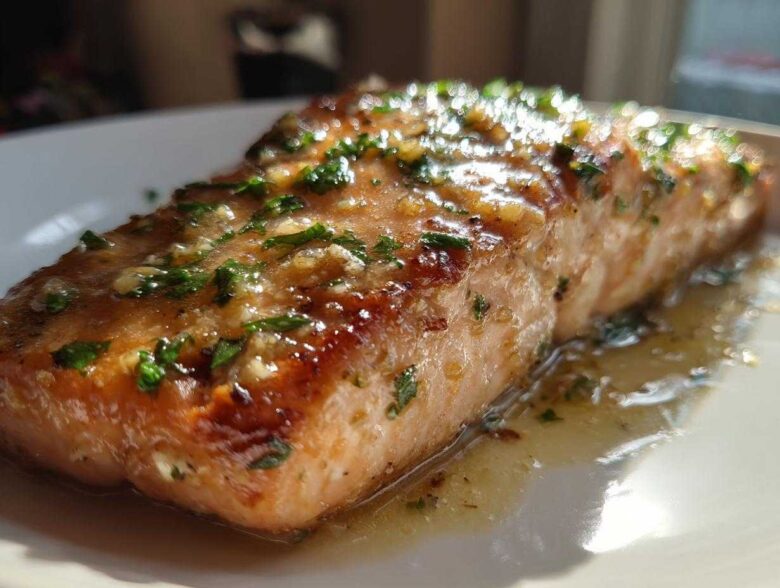
Oh, Eleanor and I were just talking about that rich, smoky flavor you get at certain steakhouses, that buttery glaze that just makes your mouth water. Sometimes, you just crave restaurant-quality food without leaving the house, right? Well, I think I’ve finally cracked the code for you! Forget fussy sauces and long prep times; this is our absolute Best Ever Salmon recipe. We’re talking about recreating that famous Texas Roadhouse Style indulgence right in your own oven, and the entire thing is ready in just 25 minutes. That beautiful, flaky salmon, coated in that savory-sweet glaze—it instantly takes me back to a wonderful trip we took years ago. Trust me, this is the one you’ll want to keep bookmarked for busy weeknights or when you need a surprisingly easy meal that looks fancy! If you want to see more of our culinary journey notes, check out the rest of our journal entries over on the blog.
Why This Texas Roadhouse Style Baked Salmon is Your New Favorite Salmon
Richard and I have cooked fish a million ways over the years—grilled, pan-seared, even steamed on vacation in Thailand! But this baked method for our homemade salmon absolutely wins for weeknight dependability. It just checks all the boxes we look for now that life has slowed down a bit.
- It delivers impressive restaurant-quality flavor without any fuss.
- It pairs beautifully with simple sides for a complete, Healthy Fish Dinner.
- It’s full of flavor but still remarkably simple to clean up!
Speedy Preparation for Your Salmon Weeknight Dinner
You simply cannot beat the speed here. From pulling the fish out of the fridge to serving it hot on a plate, we are looking at about 25 minutes total time. Think about that! This ease makes it a go-to Salmon Weeknight Dinner option for us now. We don’t need much fuss at 6 PM on a Tuesday, but we still want something delicious.
Achieving That Signature Moist and Juicy Salmon Texture
The magic of baking, especially when you use that buttery glaze, is how it shields the delicate flesh. We see so many folks struggle with dry fish, but our method ensures you get incredibly Flaky Salmon Fillets every single time. We don’t want cardboard fish; we want that delicious, melt-in-your-mouth bite. If you’re looking for more quick meal ideas like this shrimp pasta, check out that recipe too!
Gathering Ingredients for Perfect Baked Salmon
You know, when Richard first replicated this dish, he was worried we’d need some fancy, imported spice blend. But nope! That’s the brilliance of this recipe—it uses staples we almost always have on hand. It really is one of our favorite Easy Salmon Recipes because the flavor payoff is huge compared to the effort. We’re building flavor foundations here, so make sure you take a peek at our skillet corn recipe to see what other simple sides we love!
For the Salmon Fillets and Seasoning
For the main star, you’ll want four six-ounce fillets. I always tell Richard, “If you can get the skin-on pieces, do it!” Even if we aren’t aiming specifically for crispy skin, the skin helps hold that beautiful salmon together while it bakes. We’re using very common seasonings here: salt, pepper, paprika for a tiny bit of color, and then garlic and onion powders. I always throw in a pinch of cayenne just to wake everything up in the background.
Crafting the Honey Garlic Butter Glaze for Your Salmon
This is where the restaurant magic happens! You need softened, melted butter—and please, use real unsalted butter; don’t cheap out on the fat here, it makes such a difference in the glaze texture. We mix that lovely melted butter with honey, Worcestershire sauce, Dijon mustard, and two cloves of garlic that should be finely minced. That balance of sweet honey and sharp Dijon is precisely what gives the Honey Glazed Salmon its signature punch.
Step-by-Step Instructions for Restaurant Style Salmon
Now we get to the fun part—putting it all together so it tastes just like that wonderful meal we had at the steakhouse years ago. Eleanor always says that cooking well isn’t about fancy techniques; it’s about clear steps executed with care. If you’re nervous about cooking fish, don’t be! This recipe is remarkably forgiving, which is why it’s such a fantastic Restaurant Style Salmon for beginners.
Prepping the Salmon and Oven Setup
First things first, we need to get that oven warmed up to 400 degrees Fahrenheit. We line the baking sheet with foil or parchment paper because, honestly, cleanup is half the battle, right? Now, here’s where Richard insists we pay attention. Take your four salmon fillets and give them a good pat-down with a paper towel. I mean really dry them off! This E-E-A-T tip from Richard is vital because surface moisture works against the seasoning and prevents that nice texture from developing. Once they’re patted nice and dry, we rub them all over with our seasoning mixture—salt, pepper, paprika, garlic powder, onion powder, and that optional cayenne dash.
Applying the Honey Glazed Salmon Glaze
While the seasoning is getting cozy on the fish, whisk up your beautiful glaze in another little bowl. Take that melted butter, honey, Dijon, Worcestershire, and minced garlic and mix until it’s all singing together. What’s important here is the timing. Brush maybe two-thirds of this gorgeous glaze over the top of those seasoned fillets. We’re reserving that last bit—that’s our little secret weapon for the end. We want the initial heat to set the seasoning and start melting this first coat of Honey Glazed Salmon goodness into the fish.
Baking Time and Finishing the Salmon
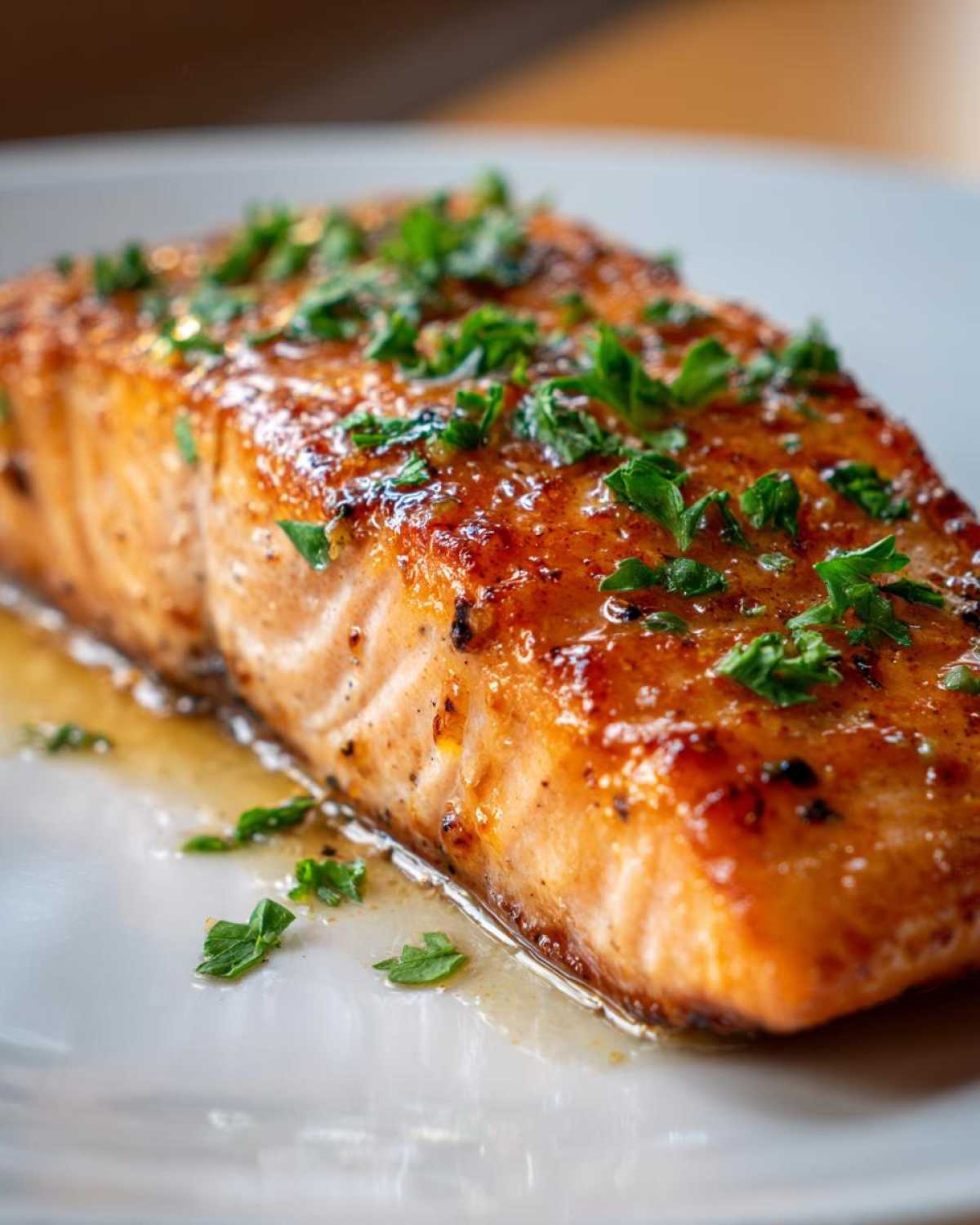
Into the oven they go! Depending on how thick those fillets are, you’re looking at 12 to 15 minutes. You’ll know they are done when they start flaking easily if you just nudge them gently with a fork. Once you pull that pan out of the oven, *immediately* brush on the rest of that reserved glaze. Don’t wait. The residual heat from the hot fish grabs that last bit of shiny sauce and melts it right into a perfect, deep coating. A light sprinkle of fresh parsley at the very end—and you’re done! Serve this right away for the best results.
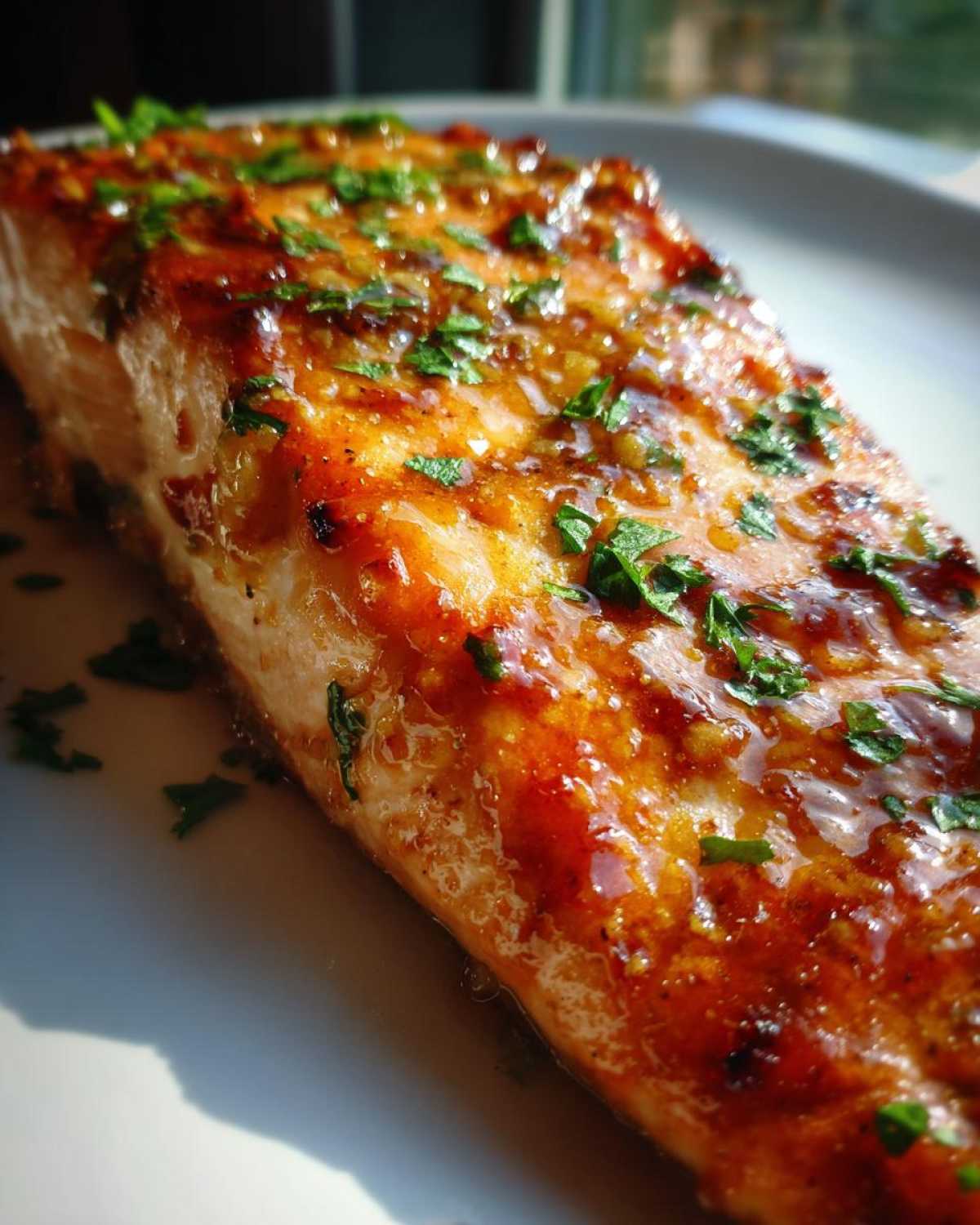
If you want to see how we make a glaze for chicken that caramelizes just as beautifully, check out our honey garlic chicken thighs recipe!
Tips for Achieving Crispy Skin Salmon Perfection
Ah, crispy skin! That’s a textural dream, isn’t it? When Richard and I were traveling years ago, we noticed that the best chefs never wasted an opportunity to get that satisfying crunch on seafood. I’ve certainly had my share of soggy skin incidents over the decades, but I finally learned the secret to getting that lovely, crackly finish on our salmon using this baked method.
If you’re specifically aiming for that craveable crunch, here’s what I do: Ensure your skin-on fillets are patted absolutely, positively dry before they even see the seasoning. Then, keep them skin-side down the entire time they bake. If, after 12 minutes, the flesh looks perfectly done but the skin is still a little soft, go ahead and switch the oven to the broiler setting for just a minute or two. Be careful, though! Broilers are quick and mean; watch it like a hawk so you don’t accidentally turn that beautiful skin into charcoal. A quick blast under that heat gives you the perfect Crispy Skin Salmon texture that rivals anything you get at a great seafood place. You can see how we get our wings crispy in the oven without frying over at our baked wings recipe!
Making Easy Salmon Recipes Adaptable: Air Fryer Salmon
Now, I know not everyone has their oven running, especially when summer hits and you just don’t want to heat up the whole kitchen. This very same flavor profile works brilliantly in the air fryer! When Richard adapted this recipe for his quick lunches, he found that the high convection speed in an air fryer really locks in moisture while still giving you a lovely finish. It’s such a fantastic way to get an even quicker result, which is why this counts as one of the most Easy Salmon Recipes we have.
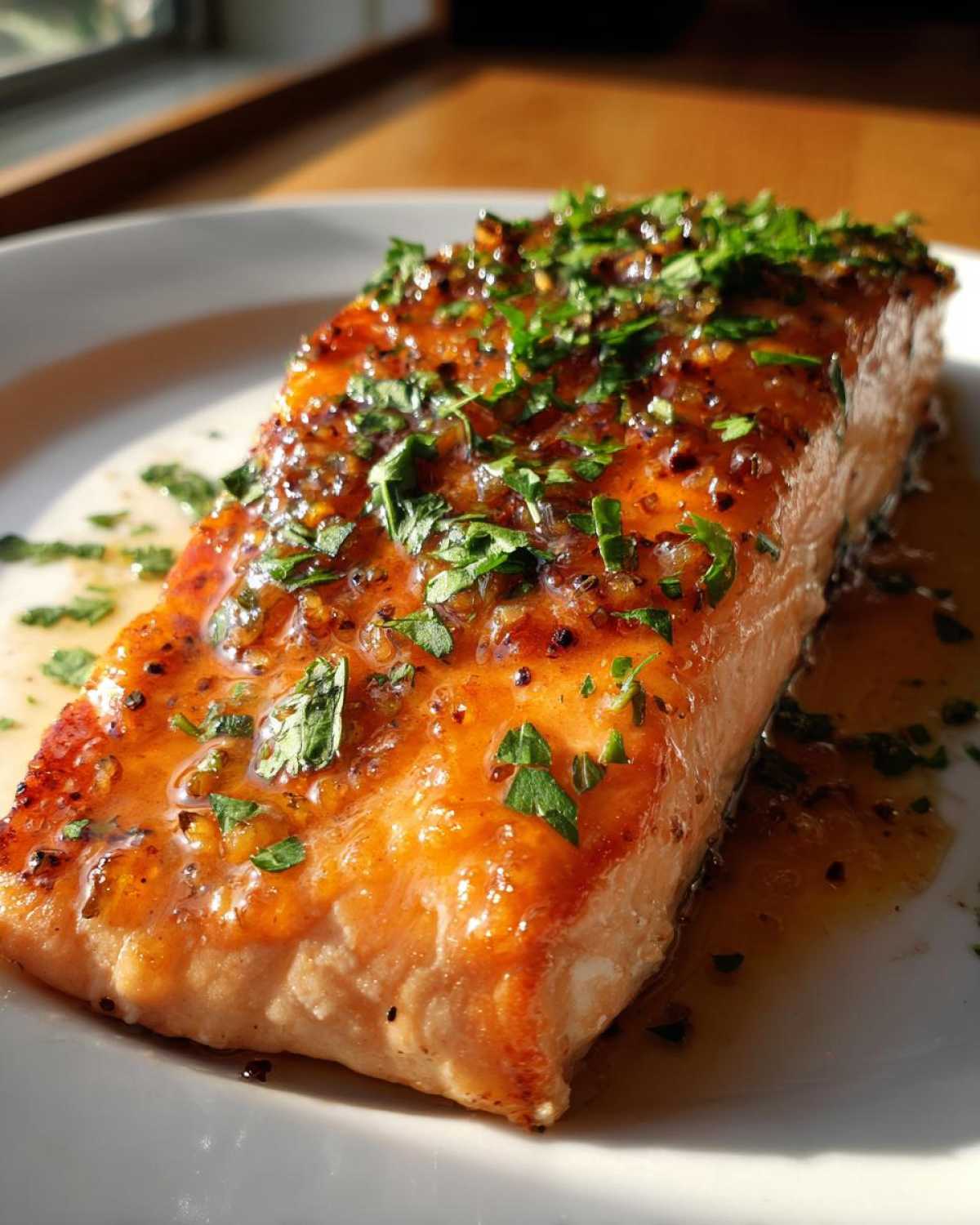
If you’re leaning towards the air fryer for your next go-around, there are just a few swaps you need to keep in mind to ensure you get that tender result we talked about earlier. I find air frying is wonderful for making sure the whole fillet cooks evenly, but you do need to lower the heat a touch compared to the oven. You can read more about our general air frying adventures here with these salmon bites!
For this Texas Roadhouse style glaze, use the same seasoning rub and glaze mixture listed in the main recipe. Instead of baking at 400°F, you’ll set the air fryer basket to 380 degrees Fahrenheit. Because the air circulates so tightly, the cooking time drops significantly—we’re usually looking at just 10 to 12 minutes maximum for a six-ounce fillet. Remember to still brush on that final reserved glaze right after you take them out so it melts beautifully over your perfect Air Fryer Salmon.
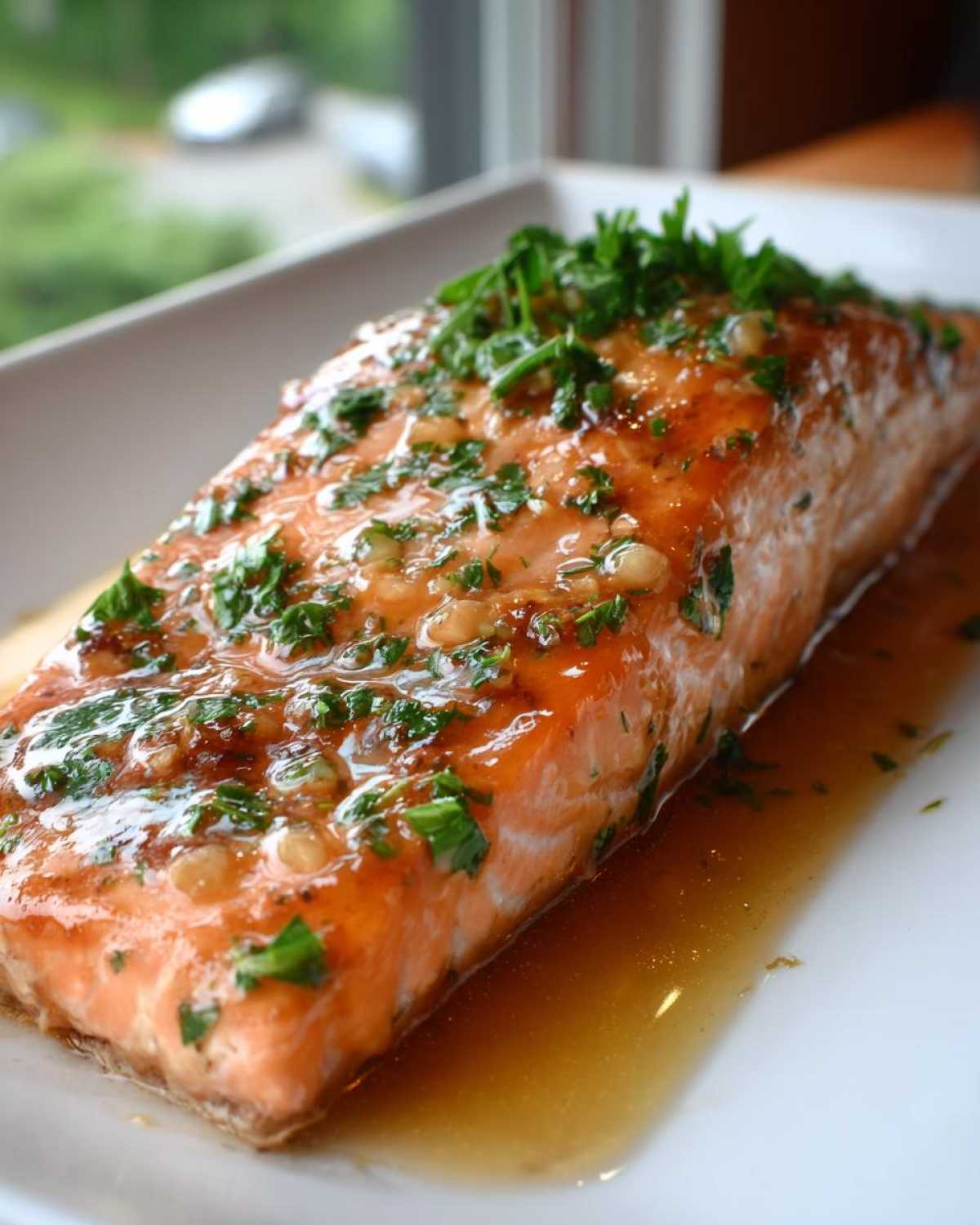
We even found a recipe online that dives deep into the smoky oven method, which is great if your oven is acting temperamental and you want to see another perspective on getting that classic flavor: check out this smoky preparation. But honestly, this recipe is fantastic either way you cook it!
Ingredient Notes and Substitutions for Your Salmon Dish
Part of sharing memories through food, which is what we do here, is making sure you can recreate the dish even if you don’t have every single item Richard and I might have had on hand during our travels. This wonderful Garlic Butter Salmon recipe is quite forgiving, which aids in making it a successful Simple Salmon Marinade alternative, even though it’s technically a glaze. Don’t fret if an item is missing; we can usually adjust!
If you’re looking for other ways to flavor your fish quickly, we have a piece dedicated to a simple salmon marinade that you might enjoy for different flavor profiles. But for this rich, buttery style, let’s talk specifics.
Adjusting the Sweetness of the Salmon Glaze
The honey is really the star that balances the savory garlic and Worcestershire, creating that signature sweet and salty mouthfeel. If you find the original recipe offers a little too much sweetness for your taste, don’t worry; you can easily tame that down. Simply reduce the honey by one teaspoon, or even swap half of it out for a teaspoon of fresh lemon juice. That little bit of citrus helps cut through the richness beautifully and results in a tangier Salmon with Sweet Glaze profile.
On the flip side, if you happen to be serving this to someone who loves things intensely sweet—like my nephew, bless his heart—feel free to bump that honey up an extra teaspoon. Just make sure you keep a very close eye on it during those final minutes of baking! A little extra sugar means it can burn quicker, so just watch for that deep golden color rather than a dark, smoky one.
Serving Suggestions for a Complete Healthy Fish Dinner
A fantastic piece of fish like this really shines when you pair it with the right companions on the plate. Richard always reminds me that while the salmon is rich with that butter and honey, we need something bright and fresh to cut through it, keeping the entire meal feeling light and balanced. We certainly want this to qualify as a wonderful, satisfying Healthy Fish Dinner!
When we first started making this, we often just served it with a simple bag of microwaved steamed rice—quick, easy, done. But over the years, we’ve learned that the sides can really elevate the experience, especially if you’re trying to impress guests. Think about what balances that deep, slightly sweet, buttery glaze.
For crisp green vegetables, you really can’t beat roasted asparagus. A little olive oil, salt, pepper, and a quick ten minutes in the oven alongside the salmon, and you’ve got perfection that offers a great textural contrast. Those little tips get delightfully charred!
If you’re looking for a grain that soaks up any extra glaze that might end up on your plate, you absolutely must try making our garlic quinoa. It’s miles better than plain white rice, and the garlic just complements the flavors in the salmon glaze so seamlessly. It’s simple comfort food made just a little bit better, which is really the goal of all our cooking here!
And if you want something a bit heartier but still on the healthier side, roasted broccoli tossed with lemon zest is always a winner. The acidity of the lemon really wakes up the palate after that rich, savory main course.
Storage and Reheating Instructions for Leftover Salmon
Now, this Texas Roadhouse style salmon is so flavorful, sometimes we just can’t finish all four pieces! That’s a good problem to have, I think. But how you store the leftovers makes a world of difference in how good they taste the next day. Richard is very particular about leftovers, especially fish, so I’ve learned the hard way what to do and, more importantly, what not to do.
The key to keeping your leftover baked salmon fresh is keeping the moisture locked in. Once the fish cools down completely—and I mean completely—transfer it to an airtight container. Don’t just let it sit on the counter wrapped loosely in foil; that’s just inviting dryness! You can place a tiny square of damp (not soaking wet!) paper towel right on top of the fillet before you seal the container. This helps keep things humid in there.
When it comes to reheating, this is where most people go wrong with flaky fish. You absolutely cannot blast it in the microwave on high heat! That super intense, fast heat will just cook the fish further and turn it tough faster than you can say “Worcestershire sauce.” The best way, in my opinion, is the gentlest way.
I recommend reheating in a skillet over very low heat with just a splash of water or maybe a tiny bit of butter melted underneath. Cover the skillet tightly with a lid. This steams the salmon ever so slightly, which brings back that beautiful moisture we worked so hard to achieve in the first place. If you absolutely must use the oven, set it to a low 300°F and wrap the piece loosely in foil before heating it through that way. Either method usually takes about 5 to 8 minutes, depending on the portion size. It won’t be exactly like fresh-from-the-oven, but it will be wonderfully soft, juicy, and flaky!
Frequently Asked Questions About Making Salmon
Richard and I always say that recipes are just starting points, and the best part is making them work for *your* kitchen! As we’ve gathered memories over the years, we’ve had readers ask all sorts of wonderful things about adapting our dishes. Here are a few of the most common questions we get about this lovely, rich baked salmon dish.
Can I use frozen salmon fillets for this recipe?
Oh, absolutely! We’ve all been there when the evening sneaks up on us and dinner plans are suddenly dashed because we forgot to pull the fish out of the freezer. You totally can use frozen fillets, but you need to thaw them first, and you must do it safely. The best way is overnight in the refrigerator. If you are really in a pinch, you can place the sealed bag of salmon in a bowl of cold water, changing that water every 30 minutes until they are thawed. Once thawed, you must still pat them very dry before seasoning, or you’ll end up with steamed fish instead of that beautiful baked finish. Remember, we want Moist and Juicy Salmon, not soggy fish!
What temperature ensures I get Flaky Salmon Fillets every time?
This is the question everyone asks about fish! While the 12 to 15 minutes at 400°F works perfectly almost every time for average six-ounce fillets, the most reliable way to guarantee those stunningly Flaky Salmon Fillets is by checking the internal temperature. You are looking for 145 degrees Fahrenheit according to food safety standards. If you don’t have a quick-read thermometer (though I highly recommend getting one!), look for the visual cues: the fish should be opaque all the way through, and when you gently press down near the thickest part with a fork, it should separate easily along its natural lines. If you see a little cloud of white stuff bubbling up—that’s just coagulated protein—it means it’s done or slightly past done, so pull it out right away!
Is this recipe considered a Simple Salmon Marinade alternative?
That’s a great distinction to make! Technically, what we are using here is a glaze because we apply it right before and right after baking. A true marinade involves soaking the fish for an extended period to actually change the texture and flavor deeper into the flesh. If you wanted to use this amazing flavor profile as a Simple Salmon Marinade, you absolutely could! I would suggest mixing up the glaze ingredients—minus about half that honey, maybe—and let the fillets soak in that wonderful mixture for anywhere from 30 minutes up to 2 hours in the fridge. If you go longer than an hour, watch the Dijon and Worcestershire; they have some acidity that can start to ‘cook’ the fish if left too long. Then, just brush on a little *extra* fresh glaze right before it goes into the oven, just as we do in the recipe, to ensure you get that perfect baked caramelization on the outside.
If you ever have more specific questions, please don’t hesitate to reach out—we love hearing from fellow cooks on the contact page!
PrintRestaurant-Quality Texas Roadhouse Style Baked Salmon in 25 Minutes
We recreate the smoky, buttery glaze of the famous Texas Roadhouse salmon right in your oven. This recipe delivers incredibly moist, flaky salmon with a restaurant-quality finish in just 25 minutes, perfect for a quick weeknight dinner or impressing guests.
- Prep Time: 10 min
- Cook Time: 15 min
- Total Time: 25 min
- Yield: 4 servings
- Category: Dinner
- Method: Baking
- Cuisine: American
- Diet: Low Fat
Ingredients
- 4 (6 ounce) salmon fillets, skin on or off
- 1 tablespoon olive oil
- 1 teaspoon salt
- 1/2 teaspoon black pepper
- 1 teaspoon paprika
- 1/2 teaspoon garlic powder
- 1/4 teaspoon onion powder
- 1/4 teaspoon cayenne pepper (optional, for a little heat)
- 1/4 cup unsalted butter, melted
- 2 tablespoons honey
- 1 tablespoon Worcestershire sauce
- 1 teaspoon Dijon mustard
- 2 cloves garlic, minced
- 1 tablespoon fresh parsley, chopped (for garnish)
Instructions
- Preheat your oven to 400 degrees Fahrenheit. Line a baking sheet with parchment paper or aluminum foil for easy cleanup.
- Pat the salmon fillets dry using paper towels. This step helps achieve a better texture. Place the fillets on the prepared baking sheet.
- In a small bowl, whisk together the olive oil, salt, pepper, paprika, garlic powder, onion powder, and cayenne pepper. Rub this seasoning mixture evenly over the top and sides of the salmon fillets.
- In a separate small bowl, prepare the glaze by whisking together the melted butter, honey, Worcestershire sauce, Dijon mustard, and minced garlic until well combined.
- Brush about two-thirds of the honey garlic butter glaze generously over the top of each salmon fillet.
- Bake the salmon for 12 to 15 minutes, depending on the thickness of your fillets, until the salmon is cooked through and flakes easily with a fork. For thicker fillets, you may need an extra minute or two.
- Remove the salmon from the oven. Brush the remaining glaze over the hot fillets immediately. The residual heat will help the glaze set slightly.
- Garnish with fresh chopped parsley before serving. Serve this perfect baked salmon immediately with your favorite sides.
Notes
- For crispy skin salmon, place the fillets skin-side down and bake for the full time. If you prefer a crispier top, you can briefly switch the oven to broil for the last 1-2 minutes, watching closely to prevent burning.
- This recipe works well for air fryer salmon too; cook at 380 degrees Fahrenheit for 10-12 minutes.
- If you want a sweeter glaze, increase the honey by one teaspoon.
Nutrition
- Serving Size: 1 fillet
- Calories: 350
- Sugar: 5
- Sodium: 450
- Fat: 20
- Saturated Fat: 10
- Unsaturated Fat: 10
- Trans Fat: 0
- Carbohydrates: 6
- Fiber: 0
- Protein: 35
- Cholesterol: 90