

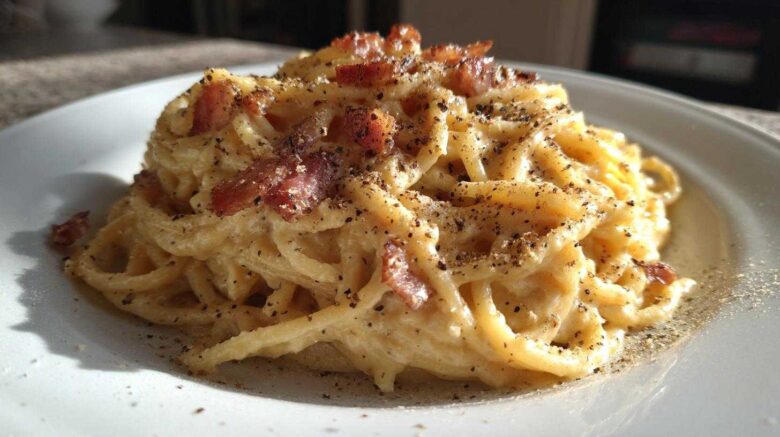
Recreating Italian Perfection: Our Authentic Spaghetti Carbonara Recipe
Oh, that trip to Florence! Richard still talks about the tiny trattoria.
They served us the most incredible Spaghetti Carbonara there.
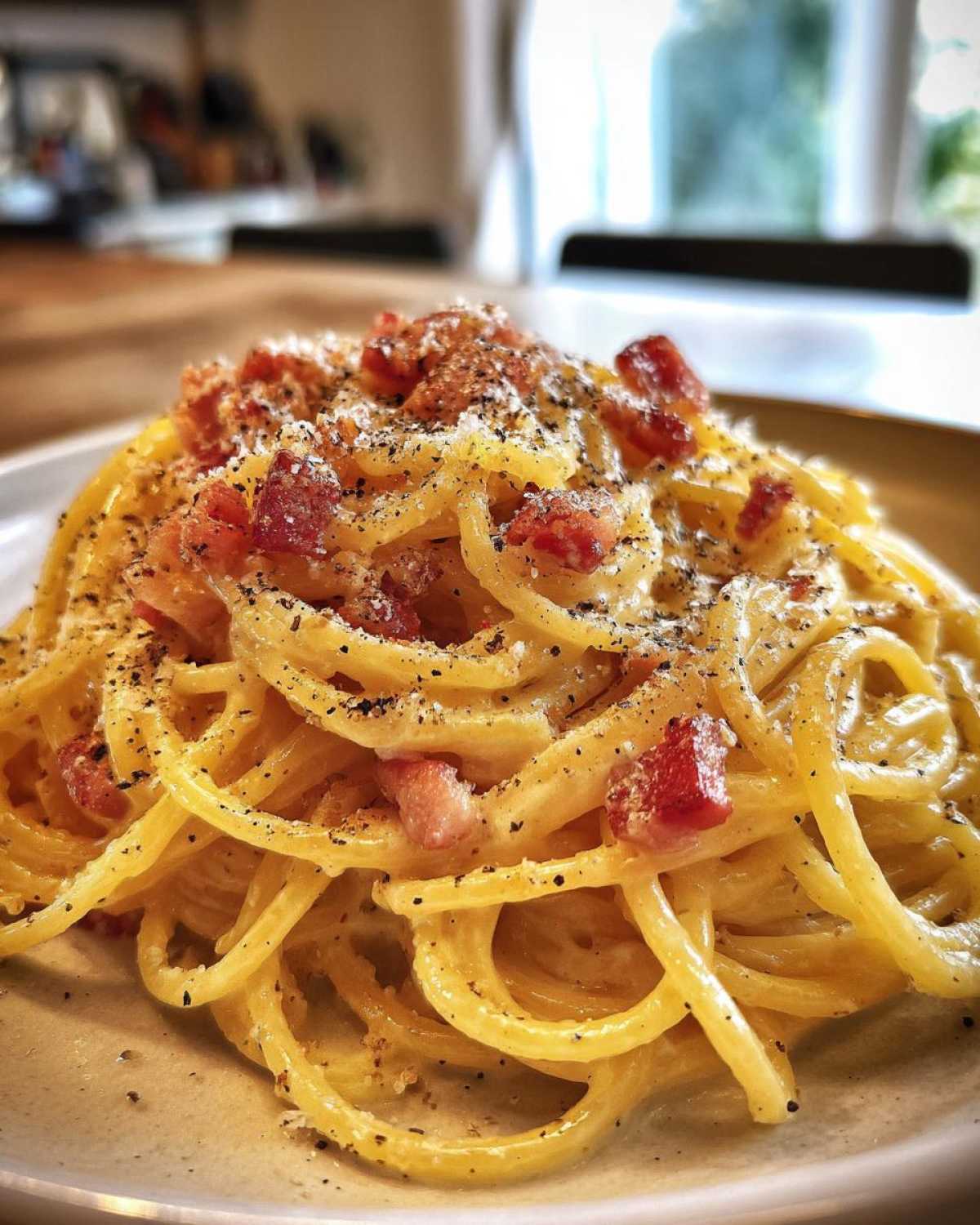
It was pure magic, creamy yet totally cream-free.
I remember thinking, “I must capture this feeling!”
That memory launched my mission to perfect this dish.
This recipe is our diary entry for that moment.
I translate Richard’s flavor recollections into these steps.
We rely only on technique for that signature silkiness.
Why This Spaghetti Carbonara Recipe Works
This method skips the cream entirely. That’s key.
Scrambled eggs ruin a good pasta night fast.
We use residual heat, not direct fire, for the sauce.
That careful temperature control makes the difference.
The result is a rich, beautiful coating for every strand.
It’s quick, flavorful, and truly authentic Italian pasta.
This simple dish proves technique beats heavy ingredients.
Essential Equipment for Perfect Spaghetti Carbonara
You don’t need fancy gadgets for this one.
A large skillet is non-negotiable for tossing later.
You need a sturdy whisk for the egg mixture.
Make sure your grater gives you very fine cheese.
A good ladle for scooping that starchy water helps too.
These simple tools keep the process smooth.
Gathering Supplies for True Spaghetti Carbonara
Now that we have our tools ready, let’s talk food.
For a perfect Spaghetti Carbonara, ingredient quality matters most.
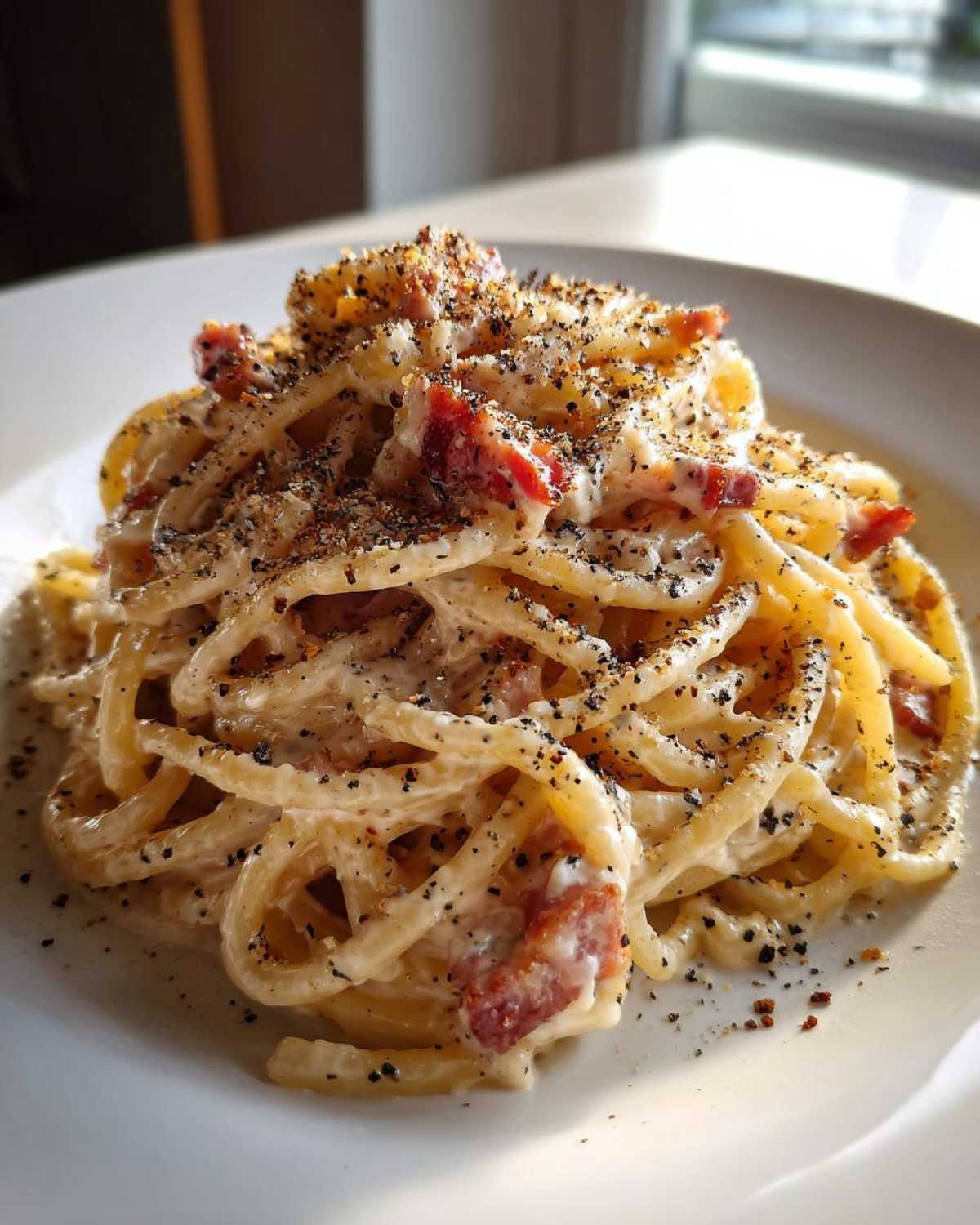
Since this recipe is so simple, every flavor shines through.
Think of these as the stars of our culinary show.
We need just a few things, but they must be the best.
Richard always reminds me: simple food needs sharp flavors.
Ingredient Breakdown and Quality Notes
Let’s look closely at what goes into our sauce base.
First, the pork: use guanciale if you can find it.
It yields the most beautiful rendered fat, which is crucial.
If bacon is your only choice, pick thick-cut, smoky stuff.
For the cheese, only Pecorino Romano gives that sharp bite.
Grate it super fine, almost powdery, for the emulsion.
And please, use lots of freshly cracked black pepper. Loads of it!
Step-by-Step Guide to Mastering Spaghetti Carbonara
This is where the magic happens, folks. Don’t rush this part.
Mastering the heat is the secret to great Spaghetti Carbonara.
Follow these steps exactly for that silky, no-cream texture.
It moves fast once the pasta is ready, so be prepped.
I’ve learned to have everything measured and ready to go.
Let’s get cooking this beautiful Italian classic.
Preparing the Guanciale and Pasta Water
First, get that big pot of water boiling hard.
Salt it well; it should taste salty like the sea.
Now, the guanciale goes into a cold, dry skillet.
Turn the heat to medium-low immediately.
We want the fat to render out slowly, not burn.
Cook it until those little pieces are perfectly crisp.
Once crisp, take the pan completely off the burner.
Leave the rendered fat right there in the pan.
Creating the Creamy Egg and Cheese Base
While the pork is rendering, focus on the sauce base.
In your mixing bowl, combine the yolks and the whole egg.
Whisk them until they lighten up just a bit.
Now, add all that finely grated Pecorino Romano.
Be generous with the freshly cracked black pepper now.
Whisk this mixture until it’s perfectly smooth, like thick paint.
No lumps of cheese should remain visible at all.
The Technique: Combining Heat and Emulsion
When the spaghetti hits that perfect al dente stage, move fast.
Reserve at least one cup of that starchy, cloudy cooking water.
Drain the pasta quickly, but don’t rinse it ever.
Toss the hot pasta right into the skillet with the guanciale and fat.
Toss it well to coat every strand in that rich pork flavor.
Crucially, make sure the skillet is OFF the heat source!
Pour the egg and cheese mixture over the hot pasta now.
Toss, toss, toss vigorously without stopping for a breath.
Add a small splash of that hot, reserved water slowly.
Keep tossing; the residual heat cooks it into a sauce.
It’s the starch and fat emulsifying with the eggs.
Add more water, a tablespoon at a time, if it seems too tight.
Stop adding water when the sauce beautifully clings to the pasta.
Serving and Enjoying Your Spaghetti Carbonara
This dish waits for no one, truly.
The moment the sauce thickens, you must serve it.
It is the final, glorious step for our Spaghetti Carbonara.
Warm bowls are the best vessels for this pasta.
Richard and I never let this masterpiece sit waiting.
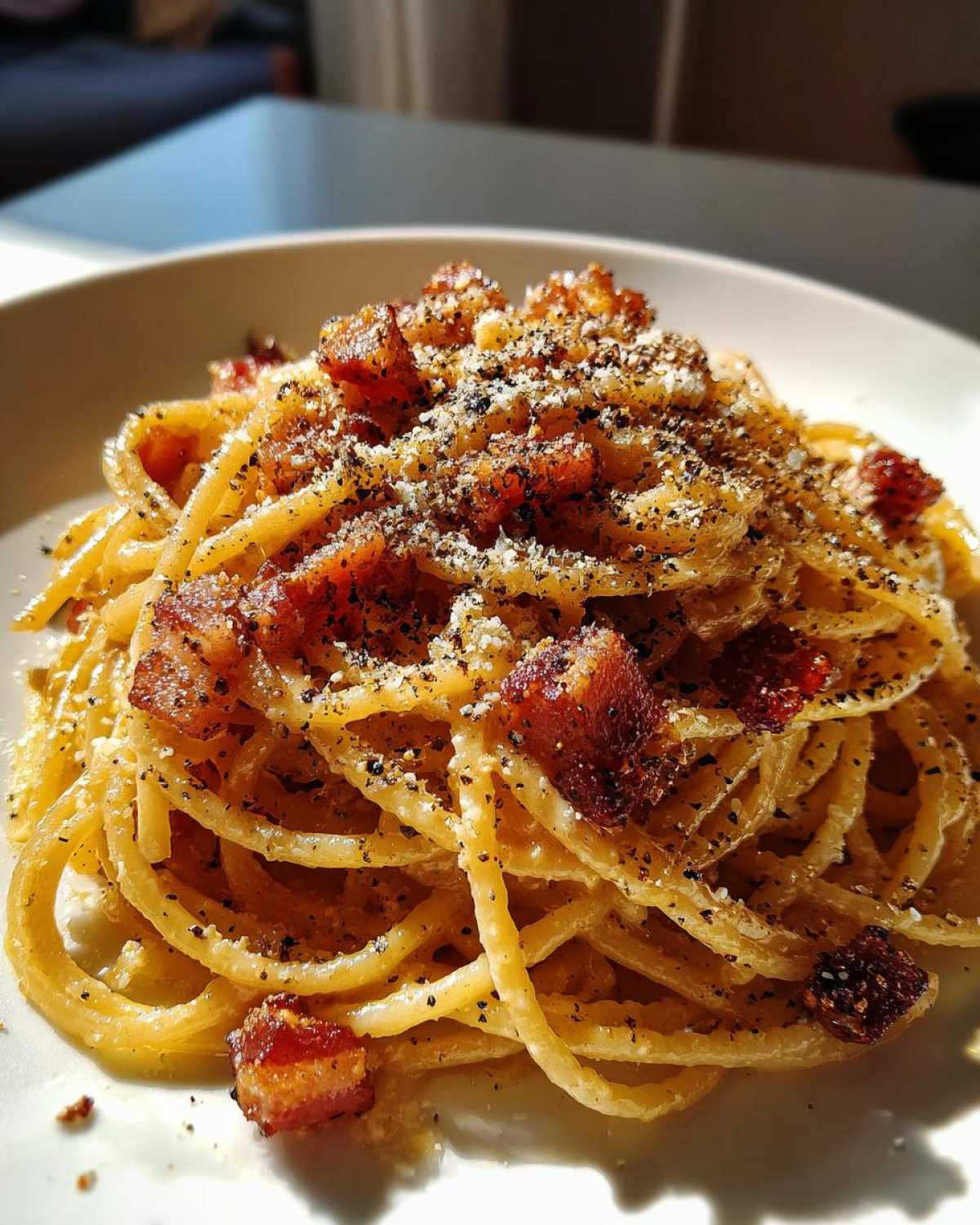
Eat it right away while the sauce is perfectly velvety.
Presentation Tips from Eleanor and Richard
We always serve ours immediately in shallow, warm bowls.
I like to give each plate a final, dramatic grind of pepper.
Richard insists on a shower of extra Pecorino Romano.
It adds that salty sharpness right before you take a bite.
Don’t just sprinkle; make sure the cheese is visible on top.
That fresh garnish really finishes the whole experience.
Answers to Common Spaghetti Carbonara Questions
I know you might have a few lingering worries.
Making authentic Spaghetti Carbonara seems scary sometimes.
Richard and I have faced every possible kitchen disaster here.
Let’s clear up the biggest concerns right now.
These answers come from years of trial and error.
We want your results to be creamy, not clumpy.
Can I Use Cream in My Spaghetti Carbonara?
Oh, bless your heart if you think about adding cream!
The short answer is simply, please don’t do it.
Authentic Italian pasta recipes rely on purity.
The richness comes from the egg yolks and rendered fat.
That starchy water is the secret binder, not heavy cream.
Adding cream hides the flavor of the good cheese.
What If My Eggs Scramble?
This is the number one fear we hear all the time.
Scrambled eggs mean your pan was way too hot.
Remember the rule: the pan must be completely off the flame.
The residual heat from the pasta does all the cooking.
Toss quickly and constantly until the sauce forms.
If it looks dry, add that reserved hot pasta water.
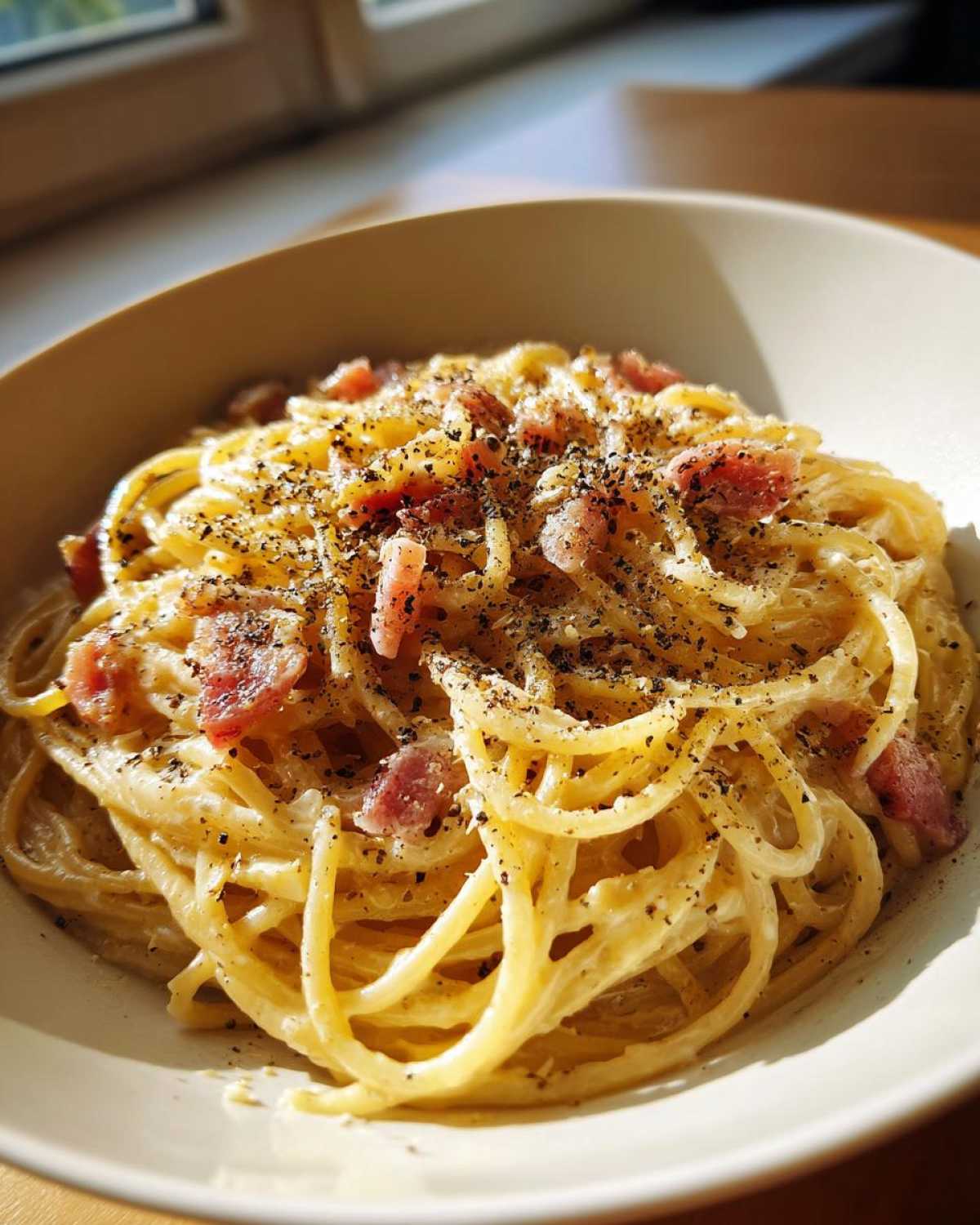
Storing Leftover Spaghetti Carbonara
If you manage to have leftovers of this amazing Spaghetti Carbonara, good for you!
It’s rare at our table, I must admit.
However, proper storage prevents sauce separation later.
The egg sauce can become tight or curdle when cold.
Store any leftovers quickly in an airtight container.
Keep it in the fridge for no more than a day.
Tips for Reheating the Sauce
Reheating this pasta needs a gentle touch, truly.
Do not microwave it; that heat is too harsh.
Place the pasta in a small skillet over low heat.
Add a splash of water or even a tiny bit of milk.
Stir constantly until it warms through slowly.
This helps loosen the sauce and makes it creamy again.
Share Your Delish Diarist Experience
Now it’s your turn, my friend.
Did this recipe bring back a memory for you?
Rate our authentic Spaghetti Carbonara below! Check out more of our favorite recipes
Tell us how it tasted at your table.
We love reading about your delicious journeys.
Estimated Nutritional Data for Spaghetti Carbonara
Richard always asks about the numbers after we eat.
He likes to track things, bless his heart.
Keep in mind these figures are just ballpark estimates.
They are based on the ingredients listed above.
Your final counts will shift based on your pork choice.
This rich Spaghetti Carbonara is certainly not a light snack! See how we estimate nutrition for other dishes
Here is what we generally estimate for one serving:
- Calories: Estimate needed (Aiming around 600-750)
- Fat: Estimate needed (Guanciale adds richness!)
- Protein: Estimate needed (Eggs and cheese help here)
- Carbohydrates: Estimate needed (Mostly from the spaghetti)
- Sodium: Estimate needed (Cheese and cured pork are salty)
We focus more on the taste than the precise metrics.
This dish is about savoring a classic moment.
Enjoy the flavor journey, not just the calorie count.
Remember, these estimates are for reference only.
PrintAmazing 5-Minute Spaghetti Carbonara Secret
This is the authentic Spaghetti Carbonara recipe, capturing the creamy texture without cream. We recreate the simple perfection we tasted in Florence, relying on technique with eggs, sharp cheese, cured pork, and black pepper.
- Prep Time: 10 minutes
- Cook Time: 15 minutes
- Total Time: 25 minutes
- Yield: 2 servings
- Category: Pasta
- Method: Stovetop
- Cuisine: Italian
- Diet: Vegetarian
Ingredients
- 200g Spaghetti
- 100g Guanciale (or good quality bacon), diced
- 2 large Egg Yolks
- 1 whole large Egg
- 50g Pecorino Romano cheese, finely grated (plus extra for serving)
- Freshly ground Black Pepper, a generous amount
- Salt for pasta water
Instructions
- Bring a large pot of salted water to a boil. Cook the spaghetti according to package directions until al dente.
- While the pasta cooks, place the diced guanciale in a cold skillet. Turn the heat to medium-low. Cook slowly until the fat renders and the guanciale pieces are crisp. Remove the skillet from the heat.
- In a bowl, whisk together the egg yolks, whole egg, grated Pecorino Romano, and a very generous amount of black pepper until completely smooth and creamy.
- Before draining the pasta, reserve about 1 cup of the starchy cooking water.
- Quickly drain the pasta and immediately add it to the skillet with the rendered guanciale and fat. Toss well to coat.
- Working quickly off the heat, pour the egg and cheese mixture over the hot pasta. Immediately begin tossing vigorously.
- Add a small splash of the reserved hot pasta water gradually while tossing constantly. The heat from the pasta and water will cook the eggs into a silky sauce, not scramble them. Add more water if needed until the sauce coats the pasta perfectly.
- Serve immediately in warm bowls, topped with extra grated Pecorino Romano and more fresh black pepper.
Notes
- The secret to a creamy sauce is removing the pan from the heat before adding the egg mixture.
- Use high-quality ingredients; this simple recipe depends on their flavor.
- If you cannot find guanciale, good quality pancetta or thick-cut bacon is an acceptable substitute.
Nutrition
- Serving Size: 1 serving
- Calories: Estimate needed
- Sugar: Estimate needed
- Sodium: Estimate needed
- Fat: Estimate needed
- Saturated Fat: Estimate needed
- Unsaturated Fat: Estimate needed
- Trans Fat: Estimate needed
- Carbohydrates: Estimate needed
- Fiber: Estimate needed
- Protein: Estimate needed
- Cholesterol: Estimate needed