


I don’t know about you, but there’s something so elegant about a truly delicate cookie. You know the kind—the ones where you see right through the thin layers of butter and sugar? People often tell me they’re impossible to get right, always ending up too hard all the way through, or worse, just a greasy puddle.
Well, stop worrying! I spent way too many weekends fussing over ratios, but I figured out the secret to the ultimate oatmeal lace cookies. We’re going for that magical combination: edges that snap and crackle when you bite them, but a center that stays soft and wonderfully chewy. It’s all about timing and temperature, trust me.
This recipe isn’t fussy, but it respects the ingredients. It’s my go-to when I need something simple that looks incredibly fancy on a platter. You’re going to love how these buttery, caramelized oat cookies come together!

Why This Oatmeal Lace Cookies Recipe Delivers Texture Perfection
Listen, the whole point of a lace cookie is that gorgeous contrast, right? We are chasing that perfect moment where the butter and sugar caramelize just enough on the outside to get that beautiful, crisp snap, but the oats in the middle hold onto moisture.
I’ve cracked the code on making these irresistible, chewy lace cookies that never turn brittle on you. It’s not just luck; it’s really about these few things we focus on:
- The Sugar Balance: Using both brown and white sugar is non-negotiable! Brown sugar provides that necessary chewiness and depth of flavor we all crave.
- Quick Baking Time: We pull these babies out when they look *almost* done. That slight softness in the middle is your insurance policy for chewiness later.
- Parchment Paper Promise: Seriously, don’t even try silicone mats here. Parchment allows the butter to spread just enough to create those signature, delicate lacy circles and achieve those crispy edge cookies we love so much. If you want to see more baking wisdom, check out my main baking resources!
Gathering Ingredients for Your Perfect Oatmeal Lace Cookies
Okay, getting the ingredients ready is half the battle when you’re making beautiful, thin butter cookies like this. Because these cookies are so simple—they are mostly fat and sugar—you really need to make sure everything is exactly how the recipe says it should be. We aren’t hiding anything here; the quality of your basics really shines through in these old fashioned lace cookies.
For about three dozen of these elegant dessert cookies, here is what you need on your counter:
- 1 cup (that’s two full sticks!) of unsalted butter, and make sure it’s softened up nicely. Not melted, just soft.
- 1 cup of packed light brown sugar—this is key for that chewiness!
- 1/2 cup of regular white granulated sugar.
- Two large eggs, room temperature if you can manage it.
- 1 teaspoon of that good vanilla extract.
- 1 1/2 cups of all-purpose flour.
- 1/2 teaspoon of baking soda. Don’t skip this, it helps with the spread just right.
- Just 1/4 teaspoon of salt.
- 2 full cups of old-fashioned rolled oats. This is the structural element!
- 1 cup of chopped pecans or walnuts if you want that nutty crunch, but keep them optional for now.
Ingredient Notes and Substitutions for Oatmeal Lace Cookies
I always get asked about the oats, so let’s tackle that first. You absolutely must use old-fashioned rolled oats here—not the quick-cooking kind. Quick oats are too fine and they dissolve too much during baking, which ruins the lace structure. You need those whole flakes for texture!
What about the nuts? Pecans give a deeper, richer flavor that compliments the butter, but walnuts are great too. If someone you’re baking for has a nut allergy, you can easily swap them out for 1 cup of semi-sweet chocolate chips. It changes the cookie profile completely, moving it toward a richer, more decadent treat, but it still works beautifully as a homemade thin cookie.
Also, if you’re looking for something a little less sweet, you can substitute a portion of the sugar, but be warned—less sugar means less spread, meaning you might end up with thicker, puffier cookies instead of true lace!
Step-by-Step Instructions for Easy Lace Cookies
Alright, let’s get baking! These are some of the easy lace cookies you’ll ever whip up, but we have to be a little careful with the dough since it’s so soft once we add the oats. First thing’s first: get your oven cranked up to 350 degrees F. You’ll need to line your baking sheets with parchment paper—I cannot stress this enough! Silicone mats just won’t give you that nice spread.
In a big bowl, cream together your softened butter with both the light brown sugar and the white sugar until it’s fluffy and pale. Then, beat in your eggs, one at a time, don’t rush that process! Follow up with that splash of vanilla extract.
In a separate, smaller bowl, whisk together your flour, baking soda, and salt so they are perfectly distributed. Then, add this dry mix to your wet ingredients little by little, mixing only until you stop seeing streaks of white flour. Finally, fold in those rolled oats—and the chopped nuts if you decided to use them. The dough is going to look very soft, almost like thick batter. That’s exactly right for these homemade thin cookies!
Now, be generous with your spacing on the pan. Drop rounded teaspoonfuls of dough about three inches apart because they *will* spread out like crazy! Seriously, give them room, or you’ll end up with one giant cookie sheet of caramel goodness.
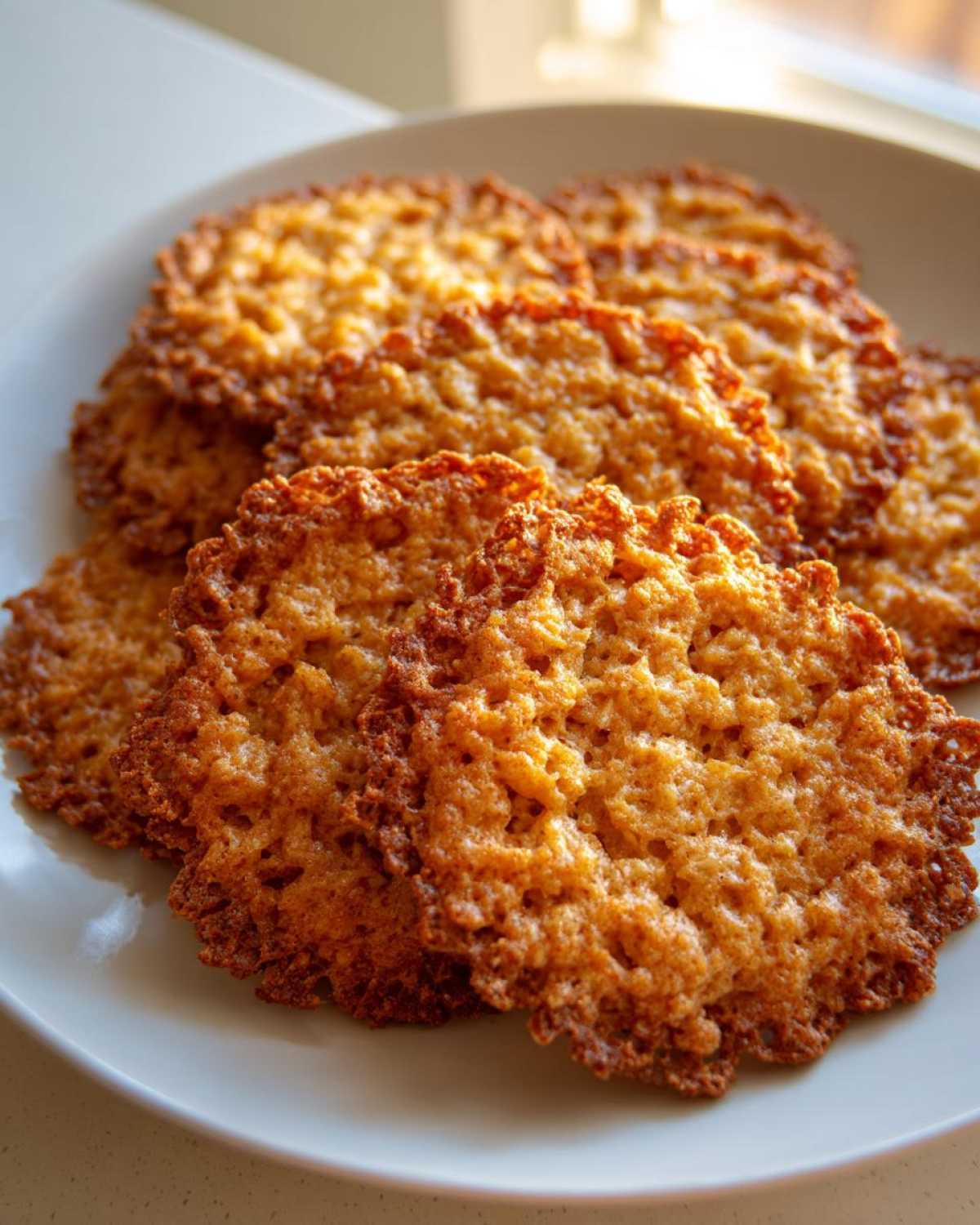
You’ll bake these for 8 to 10 minutes. If you want that perfect balance that I keep talking about, you have to watch them like a hawk near the end. I usually know mine are ready when the edges start looking dark brown and deeply caramelized, but the very middle still looks a bit shiny and soft. If you’re interested in another simple treat that always comes out moist, check out my banana bread post!
Achieving Caramelized Edges on Your Oatmeal Lace Cookies
The reason those edges get so wonderfully dark and shatteringly crisp is pure sugar science. When the butter melts and the sugars (especially the molasses from the brown sugar) hit that 350-degree heat, they caramelize beautifully right where the dough thins out the most. That’s your lace effect happening!
My main monitoring tip is this: don’t wait for the cookie to look fully “baked” in the center. If the whole thing turns deep brown, you’ve gone too far, and you’ll have a hard biscuit instead of a chewy center. We want those edges to be noticeably darker golden than the middle. Pull them out right at that 8-minute mark if your oven runs hot. That slight underbaking is what saves the center for chewiness.
Tips for Success When Making Chewy Lace Cookies
Even though these cookies are honestly so simple, they can throw a little tantrum if you don’t treat them right during the crucial spreading phase. Because we need that thin, delicate structure, a few minor adjustments make the difference between a cookie masterpiece and a messy baking sheet!
Here are my hard-won rules for ensuring you get those beautiful, chewy lace cookies every single time:
- Parchment is Your Best Friend: I mentioned this before, but I’m saying it again! You absolutely must use parchment paper. Silicone mats trap heat differently and don’t allow the butter to flow quite as rapidly, resulting in puffier, thicker cookies that won’t achieve that lace effect. Trust me on this one; it’s the biggest game-changer for these thin butter cookies. For more general baking wisdom, you can always dig into my baking resources!
- Do *Not* Scoop Far Apart Enough: I know, I know, I warned you to space them out, but I think people often under-space these more than they space out regular drop cookies. Since they spread into wide circles, you need at least three, maybe even four, inches between each teaspoon drop. If they touch while baking, don’t worry too much—you can gently separate them right when they come out of the oven, but you have to move fast!
- Cooling Patience is Key: This is where you secure the chewy center! When you pull the tray out, the cookies will look slightly wobbly and soft in the middle, and the edges will be deep brown. You have to let them sit on that hot baking sheet for a full two minutes. This allows the edges to firm up so they don’t break when you move them, but the middle stays warm enough to finish setting into that perfect chewiness. If you try to move them right away, they’ll tear.
- Don’t Overmix the Dry Stuff: Once you add the flour mixture, treat the batter gently. Over-mixing develops the gluten in the flour, and that extra structure fights against the spread, giving you a more cake-like or dense result instead of the desired delicate oat dessert structure. Just mix until combined!
Storage and Reheating Instructions for Homemade Oatmeal Lace Cookies
Now that you have made these stunning, delicate treats, you want to make sure they last, right? Because these buttery lace treats are so thin, they can go stale or soft surprisingly fast if you look at them wrong! We’ve worked hard to get that contrast between the snappy edges and the soft middle, so we can’t let improper storage ruin our hard work.
The good news is that these cookies are pretty shelf-stable if you treat them nicely. Since they have such a low moisture content thanks to all that melting and spreading, they’re great to make ahead of time, especially for homemade holiday baking.

Here’s my rule for keeping them perfect:
- Airtight is Essential: You absolutely must store your completely cooled oatmeal lace cookies in a truly airtight container. I use one with a gasket seal, especially if I’m not eating them all within a couple of days.
- No Stacking Too Tightly: If you have a lot, try to layer them between sheets of parchment or wax paper. Don’t just dump them in a pile. We don’t want to crush that beautiful lace pattern, and separating them prevents moisture transfer that can soften the edges.
- Room Temperature Only: Resist the urge to put these in the fridge! The cold just introduces too much moisture into the container, and they will lose that lovely snap in the edges very quickly.
- Shelf Life Snapshot: Honestly, they are best within the first three days, but they hold up really well at room temperature for about a week. After that, you might notice the centers getting a *tiny* bit firmer, but they should still taste wonderful!
I’ve never had much need to “reheat” these cookies, as they are best enjoyed at room temperature. Trying to warm them up might just melt that delicate structure you worked so hard to create. Just pull the container out about twenty minutes before serving if your kitchen is chilly, and you’re all set to go!
Variations on Classic Oatmeal Lace Cookies
While I stand by my classic brown butter and pecan version of these oatmeal lace cookies—they’re just perfect for holidays—I know sometimes you want to mix it up a bit! Since these cookies are so simple, they take on mix-ins really well, but you have to be careful not to overload the batter because that’s when they stop spreading correctly.
The biggest change you can make that still respects that delicate, lacy structure is adding chocolate. I love doing this when I’m making holiday oat cookies for a party because it looks so fancy, but it’s honestly so easy. When you are deciding on your mix-ins, remember the batter needs to stay relatively loose to achieve that beautiful thin cookie result.
Here are the swaps I have successfully tested in my chaotic kitchen:
- Chocolate Drizzle Magic: Forget mixing chocolate chips *in* the dough; they weigh it down too much and stop the spread! Instead, bake the cookies exactly as the recipe calls for. Once they are fully cooled (and I mean totally firm!), melt some high-quality dark chocolate until smooth. Dip the edges, or drizzle a zig-zag pattern over the top. It looks professional, but it takes two seconds. For my favorite dark chocolate base recipe, check out my thoughts on chocolate chip cookies!
- Spice It Up: If you aren’t using nuts, try adding just a tiny bit more spice to the dry mix. A half teaspoon of ground cardamom, for example, gives these buttery lace treats an amazing, unexpected warmth that feels really elegant.
- Citrus Zest: Before you mix in the oats, add the zest of one large orange to the butter/sugar mixture when you cream them. The citrus brightens up the rich butter flavor beautifully and pairs wonderfully with oats.
If you are looking for a Keto specific version, I haven’t perfected that balance yet—trying to replace all that sugar while keeping the spread right is a nightmare! For now, I stick to the original recipe because its high sugar content is what creates that signature caramelized lace effect.
Serving Suggestions for These Elegant Dessert Cookies
Honestly, these oatmeal lace cookies are so beautiful just sitting on a doily by themselves, but I love dressing them up a little bit, especially if I’m using them as part of a spread for the holidays. They are such a sophisticated treat, perfect for when you want to wow someone quickly without having to spend two hours decorating.
Because they melt right in your mouth and don’t have a heavy texture like traditional drop cookies, they pair wonderfully with things that are creamy or rich. If you’re putting together a platter of homemade holiday baking, these thin butter cookies offer a great textural break from fudge and shortbread.
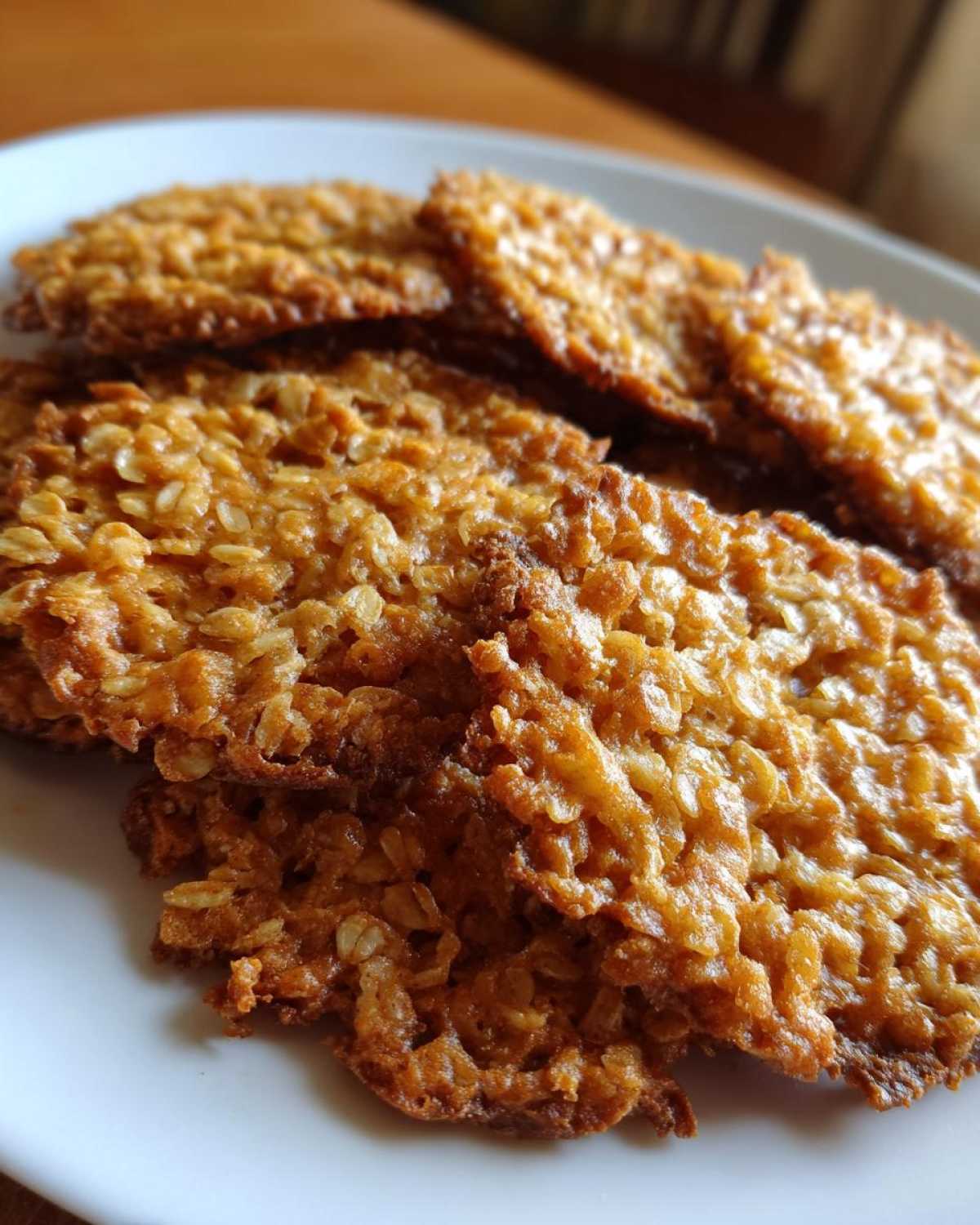
Here are my favorite ways to serve these elegant dessert cookies:
- The Ice Cream Sandwich Hack: This is my secret weapon! Wait until the cookies are fully cooled and crisp. Then, take a small scoop of really good vanilla bean ice cream—or better yet, coffee ice cream—and gently press two cookies together. Because the cookies are so thin, you get a perfect ratio of crunch to creaminess. Just don’t make them too far ahead, or the ice cream will soften the lace!
- Crumbled Over Custard: If you’re serving something rich, like a baked custard or my favorite classic crème brûlée, crushing a few of these delicate oat desserts right on top before serving adds texture and a lovely, buttery flavor. The sugar in the cookie almost melts slightly into the surface.
- Holiday Platter Feature: Since these are such beautiful holiday oat cookies, arrange them around a centerpiece dessert—maybe a dark chocolate torte or rich brownies. The lightness of the lace cookie cuts through the heaviness of the chocolate or fudge beautifully. Use them as the edible garnish!
They also go great just alongside a strong cup of coffee in the afternoon. They hold up well to dipping, too, if that’s your preferred method for enjoying a crispy edge cookie!
Frequently Asked Questions About Oatmeal Lace Cookies
Why do my cookies spread so much when baking?
That sheer amount of spread is what gives us the “lace” effect! These are basically thin butter cookies because they have a higher ratio of fat and sugar to flour than a regular drop cookie. This is normal, and it’s why we cream the butter and sugar so well—to incorporate air for that initial rise before they flatten out.
The most critical thing to remember here is the spacing: give them at least three inches apart! Also, please please use parchment paper. If you use a greased pan or silicone mats, they spread too much and might actually turn into one giant, thin cookie disaster.
Are Oatmeal Lace Cookies supposed to be soft when they come out of the oven?
Yes! If they look completely firm and dry when you pull them out, you’ve probably baked them too long, and they will end up hard all the way through, not the chewy lace cookies we want! When they are done, the edges should look deeply golden brown and caramelized, but the very center should still look slightly soft, shiny, and maybe even a little wobbly. That’s the exact moment you need to pull them off the heat. They firm up drastically on the pan during that essential two-minute cooling period.
Can I make a Keto or Low Carb version of these lace cookies?
This is the hardest question I get because the magic of the lace is entirely dependent on the melting behavior of real sugar! Sugar caramelizes, spreads, and creates those beautiful thin structures. Trying to replace it with erythritol or other sweeteners just doesn’t achieve the same result. Right now, my lace cookie recipe relies on that sugar content for texture, so I haven’t found a low-carb version that gives you the same delicate results.
What is the best way to incorporate chocolate into these cookies?
I highly recommend you treat chocolate as a topping rather than a mix-in for these delicate oat desserts. If you toss chocolate chips into the batter, the chips weigh the dough down and inhibit that beautiful, fast spread, leading to thicker, less lacy cookies. The best way to add chocolate is to let the cookies cool completely, then melt high-quality chocolate and drizzle fine lines over the top. It makes them look like incredible elegant dessert cookies without ruining the texture.
Why must I use old-fashioned rolled oats instead of quick oats?
This is a huge texture point! Quick oats are partially processed and are much smaller. If you use them, they tend to break down during the creaming and baking process and basically dissolve into the batter, making your cookies denser, more like a standard oatmeal cookie rather than a true lace cookie. Old-fashioned rolled oats hold their shape better, giving you those chewy internal structures we are aiming for in these easy lace cookies.
Estimated Nutritional Snapshot of Our Oatmeal Lace Cookies
Now, I always tell people when they look at the nutrition for something this buttery, you have to take it with a grain of salt—or maybe a grain of sugar in this case! Because these buttery lace treats are so thin and delicate, the serving size is small (just one cookie!), which keeps the numbers looking friendlier than, say, a thick slice of pound cake.
This chart below is just an *estimate* based on using the standard ingredients, including the nuts. If you skip the nuts or use a different type of sugar substitute, your count is going to change quite a bit. I always recommend you check out my general baking disclaimer if you’re tracking macros closely, as ingredient brands vary wildly!
Here is a quick snapshot for one cookie:
- Serving Size: 1 cookie
- Calories: 145
- Sugar: 11g
- Fat: 8g (with 4.5g of that being saturated fat)
- Carbohydrates: 17g
- Protein: 2g
- Sodium: 45mg
See? Not too terrible for something that tastes like pure, caramelized happiness. They are meant to be an elegant dessert cookie, after all—not your daily breakfast staple!
PrintChewy Oatmeal Lace Cookies with Crispy Edges

A simple recipe for delicate oatmeal lace cookies that achieve perfectly crispy edges and a satisfyingly chewy center.
- Prep Time: 15 min
- Cook Time: 10 min
- Total Time: 25 min
- Yield: About 3 dozen
- Category: Dessert
- Method: Baking
- Cuisine: American
- Diet: Vegetarian
Ingredients
- 1 cup (2 sticks) unsalted butter, softened
- 1 cup packed light brown sugar
- 1/2 cup granulated sugar
- 2 large eggs
- 1 teaspoon vanilla extract
- 1 1/2 cups all-purpose flour
- 1/2 teaspoon baking soda
- 1/4 teaspoon salt
- 2 cups old-fashioned rolled oats
- 1 cup chopped pecans or walnuts (optional)
Instructions
- Preheat your oven to 350 degrees F. Line baking sheets with parchment paper.
- In a large bowl, cream together the softened butter, brown sugar, and granulated sugar until light and fluffy.
- Beat in the eggs one at a time, then mix in the vanilla extract.
- In a separate bowl, whisk together the flour, baking soda, and salt.
- Gradually add the dry ingredients to the wet ingredients, mixing until just combined.
- Stir in the rolled oats and chopped nuts, if using. The dough will be soft.
- Drop rounded teaspoons of dough onto the prepared baking sheets, spacing them at least 3 inches apart, as they spread significantly.
- Bake for 8 to 10 minutes, watching closely. The edges should be deeply golden brown and caramelized, and the centers should still look slightly soft.
- Remove from the oven. Let the cookies cool on the baking sheet for 2 minutes to set the edges.
- Carefully transfer the cookies to a wire rack to cool completely. They will crisp up as they cool.
Notes
- For the best spread and texture, use parchment paper, not silicone mats.
- If you prefer a chewier cookie, slightly underbake them by about 1 minute.
- You can substitute chocolate chips for the nuts for a different flavor profile.
- Store cooled cookies in an airtight container at room temperature.
Nutrition
- Serving Size: 1 cookie
- Calories: 145
- Sugar: 11
- Sodium: 45
- Fat: 8
- Saturated Fat: 4.5
- Unsaturated Fat: 3.5
- Trans Fat: 0
- Carbohydrates: 17
- Fiber: 1
- Protein: 2
- Cholesterol: 25